China can be a rewarding and manageable destination for solo travelers. Its extensive public-transport system, widespread mobile services and busy urban centres make it possible to explore independently without joining an organized tour.
However, no destination is risk-free. The most common difficulties for solo visitors are often practical rather than violent: language barriers, payment failures, lost documents, unfamiliar transport systems, tourist scams and losing access to mobile data.
Good preparation matters. Before departure, arrange reliable internet access, activate mobile payments, install navigation and translation apps, save your accommodation addresses in Chinese and create a clear emergency plan.
Quick advice: Keep your passport secure, share your itinerary with someone you trust, use official transport, avoid unsolicited invitations involving money, and never depend on only one phone, payment method or navigation app.
Is China Safe for Solo Travelers?
Many visitors find China comfortable for independent travel, particularly in major cities and established tourist destinations. Public areas are usually busy, railway stations have identity and security checks, and urban public transport is extensively used.
Nevertheless, travelers should remain alert to:
- Pickpocketing in crowded places
- Tourist-oriented scams
- Payment and booking problems
- Traffic and road-crossing risks
- Language difficulties during emergencies
- Unsafe or unlicensed transport
- Lost passports and phones
- Weather, altitude and outdoor hazards
- Local laws and restricted areas
Safety conditions vary by city, district, time and personal circumstances. Check the latest travel advice from your own government before departure and again during the trip.
1. Prepare a Solo-Travel Safety System
When traveling alone, you do not have a companion who can immediately help if your phone, wallet or passport disappears. Build several layers of backup before leaving home.
Save These Details Offline
- Passport information page
- Visa or visa-free entry documents
- Travel insurance policy and emergency number
- Flight and train reservations
- Hotel confirmations
- Hotel names and addresses in Chinese
- Emergency contacts
- Embassy or consulate information
- Important medical details
- Allergy information translated into Chinese
- Copies of prescriptions
- Bank and card-support numbers
Store copies securely in more than one place. For example, keep encrypted digital copies, one paper copy in your luggage and essential information on your phone.
A copy does not replace your original passport, but it can help when reporting a lost document or contacting your embassy.
Share Your Itinerary
Give a trusted friend or family member:
- Your flight details
- Accommodation addresses
- Intercity transport plans
- Travel insurance details
- A copy of your passport information page
- Your local phone number, if available
- Your expected check-in schedule
Agree on how often you will contact them. A short daily message is particularly useful during remote, outdoor or multi-city travel.
2. Prepare Your Phone Before Departure
Your phone may become your map, translator, wallet, railway ticket manager and emergency communication tool.
Before traveling, install and test:
- AMap Global or another reliable local navigation app
- An offline-capable map
- A camera and conversation translator
- Pleco or another Chinese dictionary
- Railway 12306 or a reputable train-booking platform
- Alipay
- WeChat and Weixin Pay
- DiDi or another legitimate ride-hailing service
- Your airline and hotel apps
- Your travel-insurance app
Download offline maps and Simplified Chinese language packs. Test them in airplane mode before departure.
Also prepare:
- A reliable mobile-data plan
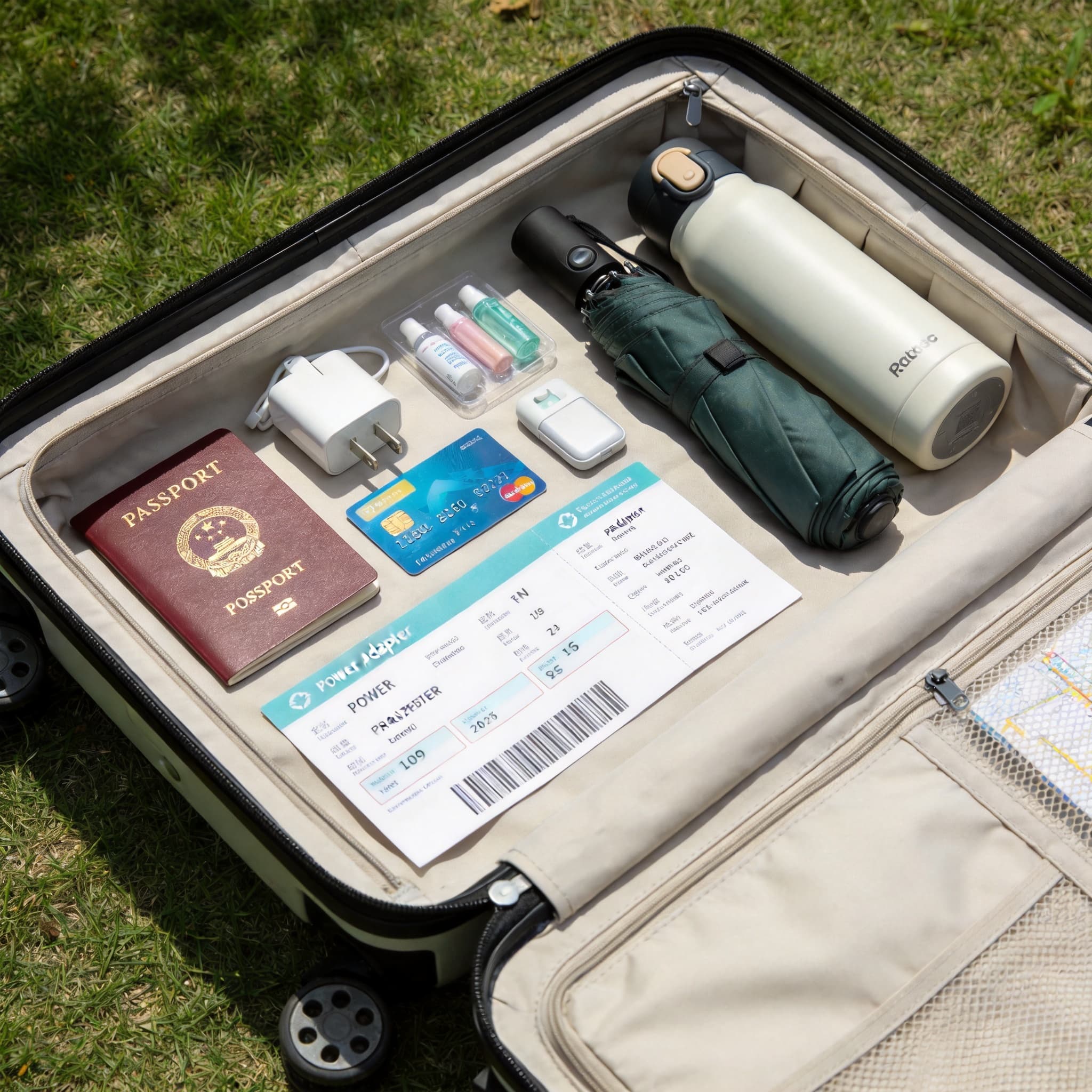
- A power bank
- A charging cable
- A plug adapter
- Secure phone locking
- Biometric authentication
- Remote device-location and locking
- Account-recovery information
Do not allow a dead battery to remove your access to payments, navigation and emergency contacts simultaneously.
3. Keep Your Passport and Valuables Secure
Your passport may be required for:
- Hotel check-in
- Train travel
- Domestic flights
- Identity verification
- Certain attraction reservations
- Police or immigration procedures
Carry it securely when necessary, but do not keep every valuable in the same bag.
Use a Split-Storage Strategy
Keep these items in separate places:
- Primary bank card
- Backup bank card
- Emergency cash
- Passport
- Passport copy
- Phone
- Spare charging cable
If your wallet is lost, you should still have access to money. If your phone disappears, you should still know your accommodation address and emergency contacts.
In crowded metro stations, railway terminals, shopping streets and tourist attractions:
- Close every zipper.
- Keep your bag in front of you.
- Avoid putting your phone in an open pocket.
- Do not hang a handbag loosely behind a chair.
- Never leave luggage unattended.
- Avoid displaying large amounts of cash.
- Keep your passport in a secure inner compartment.
4. Choose Safe and Convenient Accommodation
For solo travel, location is often more important than saving a small amount of money.
Choose accommodation that has:
- Consistently credible recent reviews
- A staffed reception desk
- Clear check-in instructions
- Convenient access to public transport
- A well-lit entrance
- A location in an active, established area
- A working telephone number
- Experience accommodating international guests
Avoid accommodation that requires you to arrive alone through an isolated area late at night without clear access instructions.
Confirm International-Guest Registration
Hotels normally record and submit the accommodation information of international guests during check-in. Present the same passport used for your reservation.
If you stay in a private home, apartment or other non-hotel accommodation, the host and guest may need to register the stay with the local public-security authority within the required period. Confirm the current local procedure with the host before arrival rather than assuming that a booking platform handles it automatically.
Protect Your Room Information
- Do not announce your room number in public.
- Ask reception staff to write it down instead of saying it loudly.
- Lock the door whenever you are inside.
- Use the secondary lock if one is provided.
- Do not open the door to an unexpected visitor without verifying their identity.
- Contact reception if someone claims to be hotel staff but you did not request assistance.
- Store valuables in a secure place.
- Do not invite a new acquaintance to your room if you feel uncertain.
5. Arrive During Daylight When Possible
Arriving in an unfamiliar city is easier when public transport is operating and accommodation staff are available.
Before boarding your flight or train, save:
- Your hotel’s Chinese name
- Its complete Chinese address
- Its telephone number
- A map pin
- A screenshot of the route
- The nearest metro station and exit
If arriving late:
- Arrange official transport in advance.
- Confirm whether reception is open.
- Ask for detailed check-in instructions.
- Avoid walking through an unfamiliar isolated area with luggage.
- Keep your phone charged.
- Tell someone when you have reached the hotel.
6. Use Public Transport Safely
China’s metro and high-speed railway systems can be highly practical for solo travelers, but large stations may be crowded and confusing.
Metro Safety
- Keep your bag closed and in front of you.
- Stay behind the platform safety line.
- Allow passengers to exit before entering.
- Do not stand too close to closing doors.
- Check the final service time before going out at night.
- Confirm the line, direction and destination station.
- Note the correct station exit; different exits may lead to opposite sides of a large road.
- Avoid staring at your phone while walking through dense crowds.
Railway Safety
- Confirm the complete departure-station name.
- Carry the physical passport used to book the ticket.
- Arrive early for identity and security checks.
- Keep your train, carriage and seat information offline.
- Do not follow unofficial ticket sellers.
- Use official station signs, staffed counters or your booking platform.
- Keep luggage within sight.
- Do not accept responsibility for a stranger’s bag or package.
Large cities can have several railway stations. A ticket from Beijing South is not valid from another Beijing station, and Shanghai Hongqiao is different from Shanghai Railway Station. Verify the exact terminal before leaving your hotel.
7. Take Taxis and Ride-Hailing Cars Safely
App-based ride-hailing can reduce misunderstandings because the pickup point, destination, route and vehicle details are recorded.
Before entering a vehicle:
- Match the license plate with the app.
- Check the vehicle model and color.
- Verify the driver information.
- Confirm your destination in the app.
- Use the designated pickup area at airports and stations.
- Refuse a vehicle that does not match the booking.
- Do not accept an unsolicited replacement driver.
During the ride:
- Follow the route on your map.
- Keep your phone accessible.
- Avoid sharing unnecessary personal information.
- Do not reveal that nobody knows where you are.
- Use the app’s safety or trip-sharing feature if available.
- Leave the vehicle in a busy, well-lit place if you feel uncomfortable and it is safe to do so.
For street taxis, use the official taxi queue. Ask the driver to use the meter where applicable, and show the destination in Chinese.
Avoid unlicensed drivers approaching travelers inside airports or railway stations.
8. Walk Safely in Chinese Cities
The main walking hazard may be traffic rather than crime. Cars, buses, bicycles, delivery scooters and electric mopeds can approach from several directions, sometimes quietly.
When crossing a road:
- Use marked crossings.
- Follow pedestrian signals.
- Look in both directions even when you have priority.
- Watch for turning vehicles.
- Check bicycle and scooter lanes separately.
- Do not step into traffic while reading your phone.
- Avoid assuming that every vehicle will stop automatically.
On pavements and shared paths, remain alert for electric scooters. Remove noise-cancelling headphones when crossing roads or walking through busy intersections.
At night, use well-lit streets and active routes. A slightly longer path through a busy area may be preferable to an isolated shortcut.
9. Avoid Common Tourist Scams
Most interactions will be ordinary and helpful, but solo travelers can be more exposed to scams because they have no companion with whom to verify a situation.
Unsolicited Tea, Bar or Art Invitations
A friendly stranger may approach you near a famous attraction, offer to practise English and invite you to a tea ceremony, bar, café, art exhibition or student event. The visit may end with an unexpectedly large bill or pressure to pay.
Protect yourself by following one simple rule:
Do not follow a stranger to a business you did not choose, especially when money, drinks, tea, art or private entertainment is involved.
You can say:
- No, thank you. — 不用了,谢谢。— Bú yòng le, xièxie.
- I already have plans. — 我已经有安排了。— Wǒ yǐjīng yǒu ānpái le.
Inflated or Unclear Prices
Before accepting a service:
- Ask for the price.
- Check whether the amount is per person, item, hour or session.
- Confirm whether additional charges apply.
- Take a photograph of the displayed price when appropriate.
- Do not authorize an unclear payment.
- Review the amount carefully before entering your payment password.
If a dispute arises, stay calm, preserve receipts and screenshots, and seek help from the platform, local authorities or a government service hotline.
Unofficial Tickets and Tours
Purchase tickets through:
- Official attraction channels
- Official railway platforms
- Recognized booking services
- Your hotel
- Licensed travel agencies
Avoid individuals promising secret entrances, immediate upgrades, sold-out tickets or exceptionally cheap private tours.
Counterfeit or Substituted QR Codes
Before making a mobile payment:
- Confirm the merchant name shown in the app.
- Check the transaction amount.
- Verify that the QR code belongs to the business.
- Avoid scanning codes sent by unknown contacts.
- Stop if the payment recipient appears unrelated.
Fake Officials and Urgent Payment Demands
Be suspicious if someone contacts you unexpectedly and claims to represent:
- The police
- Immigration authorities
- A bank
- A courier
- Your embassy
- A payment platform
Do not send money or reveal verification codes under pressure. End the conversation and contact the organization through an independently verified official number.
10. Drink and Nightlife Safety
Solo travelers should apply the same nightlife precautions they would use elsewhere.
- Choose established venues with clear prices.
- Keep your drink in sight.
- Do not accept an opened drink from a stranger.
- Avoid becoming so intoxicated that you cannot navigate or protect your belongings.
- Arrange your return journey before your phone battery becomes low.
- Verify the ride-hailing vehicle.
- Do not disclose your hotel room number.
- Leave if the atmosphere becomes uncomfortable.
- Tell a trusted person where you are going.
- Avoid accompanying a new acquaintance to an isolated or private location.
If you believe your drink has been interfered with, seek help immediately from staff, police or medical services.
11. Solo Female Travel Safety
Many women travel independently in China, but gender-specific precautions remain sensible.
- Choose accommodation with recent reviews from solo female travelers.
- Avoid isolated streets and parks late at night.
- Use app-based transport after public transport closes.
- Verify the license plate before entering a car.
- Share the trip details with someone you trust.
- Do not reveal your room number or complete itinerary to a new acquaintance.
- Keep control of your drink.
- Trust discomfort without waiting for proof.
- Move toward staff, families, security personnel or a busy business if someone follows you.
- Ask hotel reception for help arranging transportation.
Useful phrases include:
- Please leave me alone. — 请不要打扰我。— Qǐng bú yào dǎrǎo wǒ.
- I don’t know you. — 我不认识你。— Wǒ bú rènshi nǐ.
- Please call the police. — 请报警。— Qǐng bàojǐng.
- I need help. — 我需要帮助。— Wǒ xūyào bāngzhù.
Your safety is more important than appearing polite.
12. LGBTQ+ Solo Travelers
LGBTQ+ travelers should research the social and legal environment before departure. Experiences can vary between large international cities and smaller or more conservative locations.
Practical precautions include:
- Reviewing your government’s current travel advice
- Checking recent traveler reports
- Using discretion in unfamiliar environments
- Choosing established accommodation
- Avoiding disclosure of private information to strangers
- Confirming that social or dating-app meetings occur in public places
- Telling someone where you are going
- Leaving immediately if a meeting feels unsafe
When meeting someone from an app, choose a busy public venue and arrange your own transport.
13. Food and Water Safety
Food is a major part of traveling in China, but unfamiliar ingredients and preparation methods can cause difficulties.
Safer Food Practices
- Choose busy establishments with good turnover.
- Prefer freshly cooked food served hot.
- Check whether raw or undercooked ingredients are involved.
- Use caution with food that has been sitting unrefrigerated.
- Wash or peel fruit when appropriate.
- Carry medicine you know you can safely use.
- Maintain hydration during hot weather.
Many visitors prefer bottled, filtered or properly boiled drinking water instead of drinking directly from the tap. Follow local guidance at your accommodation.
Allergies and Dietary Restrictions
Prepare a written Chinese allergy card containing:
- The exact allergen
- The seriousness of the reaction
- Ingredients that must be avoided
- Cross-contamination concerns
- Emergency instructions
Useful phrases:
- I am allergic to peanuts. — 我对花生过敏。
- This is a serious allergy. — 这是严重的过敏。
- Does this contain this ingredient? — 这个含有这种成分吗?
- Please use separate utensils. — 请使用单独的餐具。
Do not rely solely on automatic camera translation for a life-threatening allergy.
14. Medical Safety and Travel Insurance
Purchase travel insurance that covers:
- Emergency medical treatment
- Hospitalization
- Medical evacuation
- Trip interruption
- Lost or stolen belongings
- Adventure activities you intend to undertake
- Existing medical conditions where applicable
Save the insurer’s emergency-assistance number offline.
Carry essential medicine in its original packaging, along with prescriptions or a doctor’s letter where appropriate. Confirm before travel whether your medication is permitted in China.
For a non-life-threatening medical problem, your hotel may be able to help identify a suitable clinic or hospital. For a serious emergency, call 120.
Prepare this message on your phone:
I am a foreign traveler. I do not speak Chinese. I need medical help.
我是外国游客。我不会说中文。我需要医疗帮助。
Wǒ shì wàiguó yóukè. Wǒ bú huì shuō Zhōngwén. Wǒ xūyào yīliáo bāngzhù.
15. Weather, Altitude and Outdoor Safety
China covers a vast range of climates and landscapes. Conditions in one region may differ dramatically from another.
Before traveling, check:
- Temperature
- Air quality
- Rainfall
- Typhoon warnings
- Flood risk
- Snow and ice
- Heat alerts
- Trail closures
- Altitude
- Transport disruptions
High-Altitude Destinations
Destinations in Tibet, western Sichuan, Qinghai and parts of Yunnan may present altitude risks.
Ascend gradually when possible. Seek medical help if symptoms become serious, particularly if you experience:
- Difficulty breathing at rest
- Confusion
- Loss of coordination
- Severe or worsening headache
- Chest tightness
- Persistent vomiting
Do not treat oxygen as a substitute for descent or professional medical care when severe symptoms develop.
Some high-altitude or border destinations require permits or have access restrictions. Check the rules before booking independent travel.
Hiking and Remote Areas
- Do not begin an unfamiliar trail too late in the day.
- Check whether the route is officially open.
- Tell someone where you are going.
- Carry water, food and weather protection.
- Download an offline map.
- Bring a charged power bank.
- Avoid unmarked shortcuts.
- Do not rely on mobile reception.
- Turn back before conditions become dangerous.
- Use a licensed guide where the route, altitude or permit requirements justify it.
16. Respect Local Laws and Restrictions
Travelers are subject to Chinese law. Rules that differ from those in your home country still apply to you.
General precautions include:
- Do not possess or use illegal drugs.
- Do not carry packages for strangers.
- Do not work without the correct authorization.
- Do not overstay your permitted entry period.
- Do not enter restricted or closed areas.
- Follow instructions from police, immigration and security staff.
- Avoid photographing military sites, security facilities or places displaying photography restrictions.
- Check local rules before flying a drone.
- Carry the documents required for identity checks and travel.
- Use licensed transport and accommodation.
- Respect rules at religious and cultural sites.
If you are uncertain whether an activity is permitted, verify through an official authority rather than relying on a stranger or social-media post.
17. What to Do If You Lose Your Passport
Act immediately.
- Return to the last place where you used or saw the passport.
- Ask hotel, station or attraction staff to check lost property.
- Report the loss to the local police.
- Obtain written documentation of the report.
- Contact your embassy or consulate.
- Follow its procedure for an emergency travel document or replacement passport.
- Contact immigration authorities if your visa, entry record or residence document must be replaced or transferred.
- Inform your airline and accommodation if your travel plans change.
Keep copies of the passport information page, visa and entry documents, but remember that copies do not replace the lost original.
18. What to Do If You Lose Your Phone
Because your phone may control payments, maps, messages and bookings, act quickly:
- Use a trusted device to locate and lock the phone.
- Contact your mobile carrier.
- Freeze or remove linked payment cards.
- Contact Alipay, WeChat Pay and your bank if necessary.
- Change important passwords.
- Review recent transactions.
- Report theft to the police.
- Use your offline copies to access hotel, transport and insurance details.
Never store every account-recovery code exclusively on the phone itself.
19. Emergency Numbers in Mainland China
| Emergency | Number |
|---|---|
| Police | 110 |
| Fire and rescue | 119 |
| Medical ambulance | 120 |
| Traffic accidents | 122 |
| Immigration and entry-exit enquiries | 12367 |
| Government service hotline for non-emergency assistance | 12345 |
Language support varies by location and service. Do not assume that every operator speaks English.
If you cannot communicate:
- State or show your location first.
- Ask a hotel employee, security guard or nearby person to help.
- Use a translation app.
- Show a prepared emergency message in Chinese.
- Keep the line open until the operator instructs you to end the call.
Emergency Message
I need help. I am a foreign traveler and I do not speak Chinese. Please call the police.
我需要帮助。我是外国游客,我不会说中文。请报警。
Wǒ xūyào bāngzhù. Wǒ shì wàiguó yóukè, wǒ bú huì shuō Zhōngwén. Qǐng bàojǐng.
Medical Emergency Message
Please call an ambulance. My location is shown here.
请叫救护车。我的位置在这里。
Qǐng jiào jiùhùchē. Wǒ de wèizhì zài zhèlǐ.
20. If You Feel Unsafe
You do not need to determine whether a threat is “serious enough” before moving to safety.
Take immediate practical action:
- Enter a busy shop, hotel or staffed public building.
- Approach uniformed security personnel or police.
- Call or message someone you trust.
- Share your live location.
- Request a verified ride.
- Do not return alone to a place where the person can follow you.
- Call 110 if you believe you are in danger.
- Preserve messages, photographs, receipts and booking details.
Do not confront an aggressive person over money or property if doing so creates a greater physical risk.
21. Daily Solo-Travel Habits
A short routine can prevent many problems.
Every Morning
- Charge your phone and power bank.
- Check the weather.
- Confirm opening hours and reservations.
- Review your transport route.
- Save the return route to your accommodation.
- Check that your passport and payment backups are secure.
During the Day
- Keep your bag closed.
- Monitor your phone battery.
- Check payment amounts carefully.
- Stay aware in crowded areas.
- Avoid isolated shortcuts.
- Tell someone if your plans change substantially.
Every Evening
- Confirm the route back to your accommodation.
- Check the final metro or bus time.
- Arrange a verified ride if returning late.
- Charge all devices.
- Back up important photographs and documents.
- Send a check-in message to someone you trust.
22. Solo Travel Safety Checklist
Before Departure
- [ ] Check current government travel advice.
- [ ] Purchase suitable travel insurance.
- [ ] Copy your passport, visa and entry documents.
- [ ] Save embassy or consulate details.
- [ ] Save China’s emergency numbers.
- [ ] Install navigation and translation apps.
- [ ] Download offline maps and language packs.
- [ ] Arrange reliable mobile data.
- [ ] Set up Alipay and WeChat Pay.
- [ ] Bring physical cards and RMB cash.
- [ ] Save accommodation addresses in Chinese.
- [ ] Share your itinerary with a trusted person.
- [ ] Prepare medical and allergy information.
- [ ] Pack required medicine and prescriptions.
- [ ] Activate remote phone-location and locking features.
During the Trip
- [ ] Keep your passport secure.
- [ ] Split cash and cards between separate places.
- [ ] Carry a charged power bank.
- [ ] Use official transport.
- [ ] Verify ride-hailing vehicle details.
- [ ] Avoid unplanned invitations involving money.
- [ ] Protect valuables in crowded areas.
- [ ] Monitor weather and transport disruptions.
- [ ] Keep accommodation details available offline.
- [ ] Send regular check-in messages.
- [ ] Follow local laws and access restrictions.
- [ ] Trust your instincts and leave uncomfortable situations.
Final Takeaway
Solo travel in China can be highly manageable when you prepare for the systems you will depend on. The most important risks are not limited to crime; losing your phone, reaching the wrong station, encountering a payment failure or being unable to communicate during an emergency can also create serious problems when you are alone.
Build a reliable safety system before departure:
- Secure your passport and create backups
- Share your itinerary
- Prepare maps and translation tools
- Set up more than one payment method
- Use official transport
- Choose convenient accommodation
- Recognize common tourist scams
- Save emergency numbers and Chinese assistance phrases
- Carry mobile data and backup power
- Leave immediately when a situation feels wrong
Preparation, situational awareness and several independent backups will allow you to travel with greater confidence while still enjoying the freedom of exploring China on your own.
Advertisement
ChinaTravel Editorial Desk
Maintains practical destination and trip-planning information for English-speaking visitors. Time-sensitive details should be checked with official sources.
Compare Current Trip Options
Check live availability and the provider's current terms before booking.
Compare China Trip OptionsSponsored link — we may earn a commission at no extra cost to you.