Why the Great Wall Should Be on Your Bucket List
The Great Wall of China is more than just a UNESCO World Heritage Site. It is one of the most powerful symbols of Chinese history, engineering, and cultural identity. Stretching across mountains, valleys, deserts, and grasslands, the Great Wall was built and rebuilt over many centuries to protect ancient Chinese states and dynasties from invasions from the north.
For travelers, visiting the Great Wall is not simply about checking off a famous landmark. It is an opportunity to stand on an architectural wonder that follows the natural shape of the mountains, climb ancient stone steps, pass through watchtowers, and enjoy panoramic views that change with every season. Whether you visit in spring when the hills are green, in autumn when the mountains turn golden, or in winter when snow covers the walls, the experience is unforgettable.
The Great Wall is also much larger and more diverse than many people imagine. Different sections offer completely different experiences. Some are fully restored and easy to access, while others remain rugged, wild, and more physically demanding. Choosing the right section can make your visit much more enjoyable.
Which Section Should You Visit?
1. Mutianyu Great Wall — Recommended for Most Visitors
Distance from Beijing: Approximately 70 km
Travel time: Around 1.5 to 2 hours by car, depending on traffic
Best for: First-time visitors, families, photographers, and travelers who want a comfortable but impressive Great Wall experience
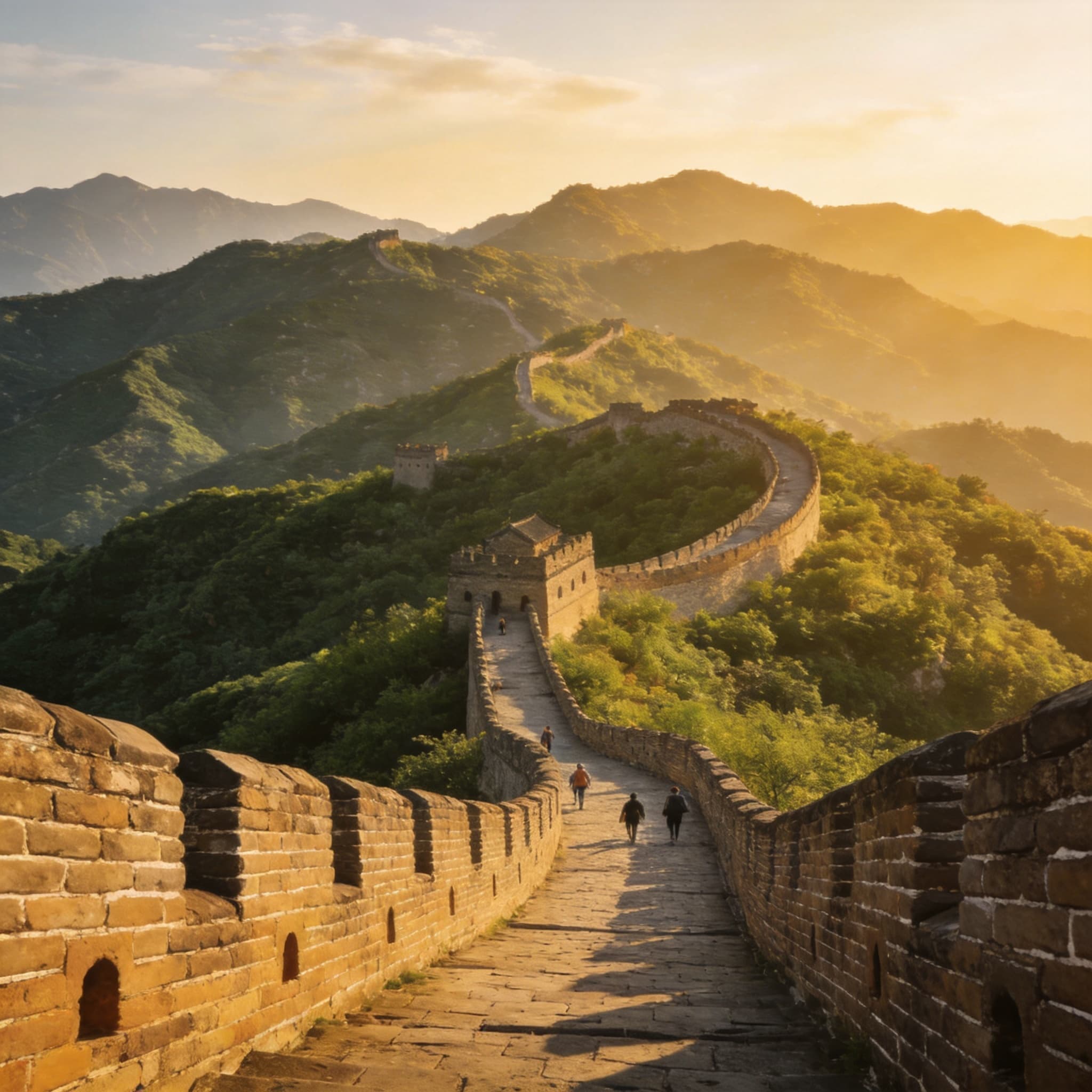
Mutianyu is one of the most popular and well-maintained sections of the Great Wall near Beijing. It is famous for its dramatic mountain scenery, wide walking paths, restored watchtowers, and relatively lower crowds compared with Badaling, another well-known section of the wall.
The wall at Mutianyu winds along green mountain ridges and offers beautiful views in every direction. It has many watchtowers, which gives visitors plenty of opportunities to stop, rest, and take photos. The stairs can still be steep in some places, but the overall route is more manageable than many wild sections.
One of the biggest advantages of Mutianyu is that visitors can take a cable car or chairlift up to the wall instead of hiking from the base. After exploring the wall, you can also take a toboggan ride down the mountain, which is a fun and memorable option for many visitors.
Why visit Mutianyu?
- Fully restored and easy to walk on
- Less crowded than Badaling in many cases
- Excellent mountain scenery and photo opportunities
- Cable car, chairlift, and toboggan options available
- Suitable for visitors with limited time or moderate fitness levels
- A good balance between convenience, comfort, and historical atmosphere
Recommended experience:
Take the cable car or chairlift up in the morning, walk along the wall for one to two hours, visit several watchtowers, and then take the toboggan down if it is operating. For the best views, walk toward the higher towers where the wall curves dramatically over the mountains.
2. Jinshanling Great Wall — Best for Hikers and Adventure Travelers
Distance from Beijing: Approximately 130 km
Travel time: Around 2.5 to 3.5 hours by car
Best for: Hikers, photographers, history lovers, and travelers looking for a quieter, more authentic experience
Jinshanling is often considered one of the most beautiful sections of the Great Wall. It offers a striking mix of restored areas and wild, unrestored sections. Unlike Mutianyu, Jinshanling feels more rugged and remote, making it especially appealing to travelers who want to experience the wall in a more natural and historical setting.
The landscape around Jinshanling is spectacular. The wall rises and falls along steep mountain ridges, with watchtowers appearing one after another in the distance. Some parts have been carefully restored, while others still show broken bricks, uneven paths, and the effects of time. This contrast gives visitors a stronger sense of how old and vast the Great Wall truly is.
Jinshanling is also a favorite location for photography, especially at sunrise and sunset. The light over the mountains can make the wall look almost endless as it disappears into the hills.
However, this section requires more preparation than Mutianyu. The paths can be uneven, steep, and physically demanding. It is best suited for visitors who are comfortable walking for several hours and who have proper hiking shoes.
Why visit Jinshanling?
- A beautiful combination of restored and wild Great Wall sections
- Fewer crowds and a more peaceful atmosphere
- Excellent for hiking and landscape photography
- More authentic and rugged than fully restored sections
- Ideal for travelers who want a deeper historical experience
- Stunning sunrise and sunset views
Recommended experience:
Plan a half-day or full-day trip. Start early, walk slowly, and give yourself enough time to enjoy the scenery. Bring plenty of water, snacks, sun protection, and a fully charged phone or camera. If you are not an experienced hiker, stay on the maintained parts of the route and avoid attempting difficult wild sections alone.
Practical Tips for Visiting the Great Wall
Go Early
Arriving early is one of the best ways to improve your experience. Try to reach the entrance by 7:30 AM if possible, especially during weekends, public holidays, and peak travel seasons.
An early start gives you several advantages:
- Fewer crowds on the wall
- Cooler temperatures during warmer months
- Better lighting for photos
- More time to explore at a relaxed pace
- Less waiting time for tickets, shuttle buses, and cable cars
Morning is especially beautiful at the Great Wall because the mountains are quieter and the light is softer.
Wear Sturdy Shoes
The Great Wall is not a flat city attraction. Even restored sections include steep staircases, uneven stones, slopes, and long walking routes. Comfortable and supportive shoes are essential.
Choose shoes with:
- Good grip
- Strong soles
- Comfortable ankle support
- Enough space for long-distance walking
Avoid high heels, slippery sandals, or thin-soled shoes. Even at Mutianyu, some steps can be surprisingly steep and uneven.
Bring Water
Walking on the Great Wall can be more physically demanding than expected, especially in hot weather. Bring at least one bottle of water per person, and consider bringing extra if you plan to hike for several hours.
You may also want to pack:
- Light snacks or energy bars
- Sunscreen
- Sunglasses
- A hat or cap
- Tissues or wet wipes
- A portable charger
- A small first-aid kit for longer hikes
Some sections have shops or vendors near the entrance, but prices can be higher and options may be limited once you are on the wall.
Dress in Layers
Weather in the mountains can change quickly. Even if Beijing feels warm in the morning, the Great Wall may be windy or much cooler, especially at higher elevations.
Dressing in layers is the easiest way to stay comfortable:
- Wear a breathable T-shirt or base layer
- Bring a light jacket or windbreaker
- Add a warmer layer in autumn, winter, or early spring
- Wear sun-protective clothing in summer
In winter, gloves, a scarf, and thermal layers are highly recommended. In summer, lightweight clothing and sun protection are essential.
Book Transport in Advance
Transportation can strongly affect your visit. The Great Wall is outside central Beijing, and public transportation may take longer or require multiple transfers.
For a smoother trip, consider booking transport in advance. Options may include:
- A private driver
- A guided day tour
- A shuttle bus service
- A rental car with a driver
- A pre-booked group tour
If you are visiting Mutianyu, it is also helpful to check whether your ticket includes the shuttle bus, cable car, chairlift, or toboggan ride. For Jinshanling, arranging transport in advance is even more important because it is farther from Beijing.
Final Thoughts
The Great Wall deserves a place on every traveler’s bucket list because it offers much more than a photo opportunity. It is a place where history, architecture, mountain scenery, and personal challenge come together.
Choose Mutianyu if you want an accessible, scenic, and comfortable first visit. Choose Jinshanling if you enjoy hiking, photography, and a more rugged connection with history.
No matter which section you choose, take your time. Walk slowly, look beyond the nearest watchtower, and imagine how this extraordinary structure once stretched across the landscape as part of one of the world’s most ambitious defensive systems. Standing on the Great Wall is not only about seeing China’s past — it is about feeling the scale of human determination.
Advertisement
Planning a trip to Beijing?
Check out our complete Beijing destination guide with everything you need to know.
Sponsored link — we may earn a commission at no extra cost to you.
ChinaTravel Editorial Desk
Maintains practical destination and trip-planning information for English-speaking visitors. Time-sensitive details should be checked with official sources.
Compare Current Trip Options
Check live availability and the provider's current terms before booking.
Find Hotels in BeijingSponsored link — we may earn a commission at no extra cost to you.