China’s high-speed rail system is one of the fastest and most convenient ways to travel between major cities. For international visitors, the process is usually straightforward once one essential rule is understood:
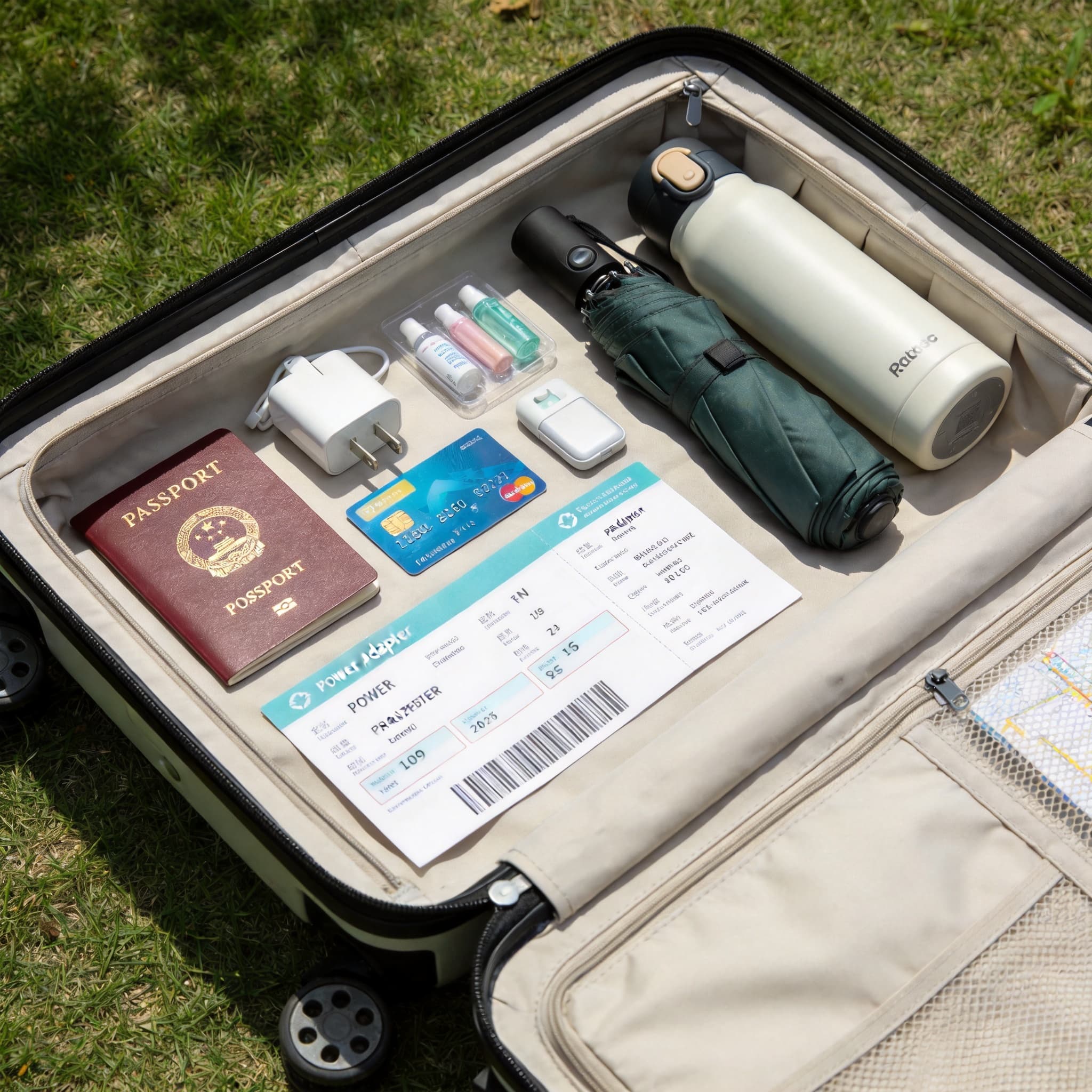
The passport used to book the ticket is also the travel credential used to enter the station, board the train, pass ticket inspections and leave the destination station.
China uses a real-name railway ticketing system. Foreign passengers must enter accurate passport information when booking and carry the original passport throughout the journey. Most tickets are electronic, so travelers normally do not need to collect a paper ticket.
This guide explains how to book high-speed rail tickets, complete passport verification, navigate Chinese railway stations and follow the luggage rules.
1. How to Book a High-Speed Rail Ticket in China
Use an Official or Reliable Booking Channel
The official railway booking platform is China Railway 12306, available as a website and mobile app.
Foreign travelers generally have three practical booking options:
- China Railway 12306: The official platform with direct access to railway ticket inventory.
- A reputable international travel platform: Often easier for foreign visitors to use, although booking or service fees may apply.
- A railway-station ticket counter: Useful if online passport verification fails or you prefer assistance from railway staff.
The official platform is normally the best choice if you can complete account registration and passport verification successfully. An international booking platform may be more convenient if you want an English-friendly interface, overseas payment support or additional customer service.
If you buy a ticket at a railway station, bring the original passport that you will use for the journey.
Register with Your Passport Details
Foreign passport holders can create an account through the 12306 app or website.
Enter the following information exactly as it appears on the passport:
- Full name
- Nationality
- Passport number
- Date of birth
- Passport expiration date
- Any other identity information requested by the platform
Be especially careful with:
- The order of your given name and surname
- Spaces and hyphens
- Middle names
- Letters and numbers in the passport number
- Passport expiration dates
Even a small difference between the reservation and the passport may cause identity-verification or boarding problems.
Complete Real-Name Verification Early
Foreign passengers must complete real-name identity verification before using the full online booking process.
The system may verify the passport information automatically. If automatic verification does not work, you may be asked to upload images of the passport for manual review.
Online manual passport verification may take approximately three to five working days, although the actual processing time can vary. Complete the verification well before the intended travel date rather than waiting until tickets go on sale.
If online verification repeatedly fails, take the original passport to a railway-station ticket counter and ask for assistance.
Check the Exact Station Name
Many large Chinese cities have several railway stations. These stations can be far apart and are not interchangeable.
For example, a city may have:
- A central or main railway station
- South Railway Station
- West Railway Station
- East Railway Station
- North Railway Station
- A station named after a district or transport hub
Always check the complete departure and arrival station names before paying.
Do not assume that a ticket departing from “Shanghai Hongqiao” also allows boarding at “Shanghai Station,” or that “Beijing South” and “Beijing West” are nearby alternatives. Your reservation is valid only for the specified journey and station.
Understand High-Speed Train Numbers
High-speed and modern intercity trains commonly use train numbers beginning with:
- G: Generally the fastest high-speed services
- D: Electric multiple-unit trains, often operating at high or medium speeds
- C: Intercity services, frequently connecting nearby cities or urban regions
The letter is useful, but you should still confirm:
- Departure date
- Departure time
- Departure station
- Arrival station
- Journey duration
- Seat class
- Train number
Choose a Seat Class
Common seat classes on Chinese high-speed trains include:
Second Class
This is the standard and usually most economical choice. The typical layout has three seats on one side of the aisle and two on the other.
Second Class is comfortable enough for most travelers and is widely available.
First Class
First Class usually provides:
- Wider seats
- More legroom
- A two-by-two seating arrangement
- A quieter cabin on many trains
It costs more than Second Class but can be worthwhile for longer journeys.
Business Class
Business Class is the premium option available on selected trains. It may provide spacious reclining seats and additional onboard services.
Prices can be significantly higher, and not every train offers this class.
When Do Tickets Go on Sale?
Railway ticket-sale periods and schedules can change, so check the current booking calendar shown in the 12306 app or on your chosen booking platform.
Popular routes can sell out quickly during:
- Chinese public holidays
- Spring Festival travel season
- Summer holidays
- Friday and Sunday evenings
- Major festivals and events
If your preferred train is unavailable, consider:
- Another departure time
- A different seat class
- A nearby railway station
- A connecting itinerary
- Joining the official waitlist if available
E-Tickets and Paper Documents
China primarily uses electronic railway tickets.
After booking, save the following information:
- Train number
- Travel date
- Departure time
- Departure station
- Arrival station
- Carriage number
- Seat number
- Booking reference
A screenshot or printed itinerary is useful for reference, especially if your phone loses internet access. However, it is not a substitute for the original passport.
The original passport used for booking is the essential travel credential.
A printed itinerary sheet or reimbursement receipt is not normally accepted as a boarding ticket.
2. Passport Checks and Station Entry
Bring the Original Passport Used for Booking
Carry the original, valid passport whose details were entered in the reservation.
The passport may be required for:
- Entering the railway station
- Passing the boarding gate
- Ticket inspections on the train
- Exiting the destination station
- Resolving booking or identity problems
A passport photocopy or digital image is useful as a backup record, but it should not be treated as a replacement for the original document.
Keep the passport in a secure but easily accessible place. Do not pack it inside a suitcase stored at the end of the carriage.
What If You Renewed Your Passport?
If you booked the ticket with an old passport and then received a new passport, the passport number may no longer match the reservation.
Contact 12306 customer service or visit a railway ticket counter before departure. Bring both passports if the old passport remains available.
Do not assume that railway staff will automatically accept a passport-number mismatch.
Arrive Early
Chinese high-speed rail does not use airline-style check-in, but passengers still need time for:
- Finding the correct station entrance
- Security screening
- Passport inspection
- Locating the waiting area
- Walking to the boarding gate
- Reaching the correct platform and carriage
For a first journey, arriving 45 to 60 minutes before departure is a sensible precaution at a large station.
Allow additional time during public holidays, rush hours or at unfamiliar transport hubs.
Boarding gates generally close shortly before departure. Arriving at the station at the scheduled departure time is too late.
Security Screening
Every passenger and all luggage must pass through security screening.
The usual process is:
- Present or scan your passport at the station entrance.
- Place bags, suitcases and loose items on the X-ray conveyor.
- Walk through the security checkpoint.
- Cooperate with any additional inspection.
- Check the departure board for the waiting area and boarding gate.
Security procedures may vary slightly by station.
Automatic Passport Gates
Some railway-station gates can read foreign passports automatically. If the automatic gate does not recognize your passport, do not panic.
Look for:
- A staffed gate
- A manual inspection lane
- A sign for special documents
- Railway employees near the gate
Show the original passport and booking details to a staff member. Manual processing is common for foreign passengers and does not necessarily mean there is a problem with the ticket.
Finding the Waiting Area
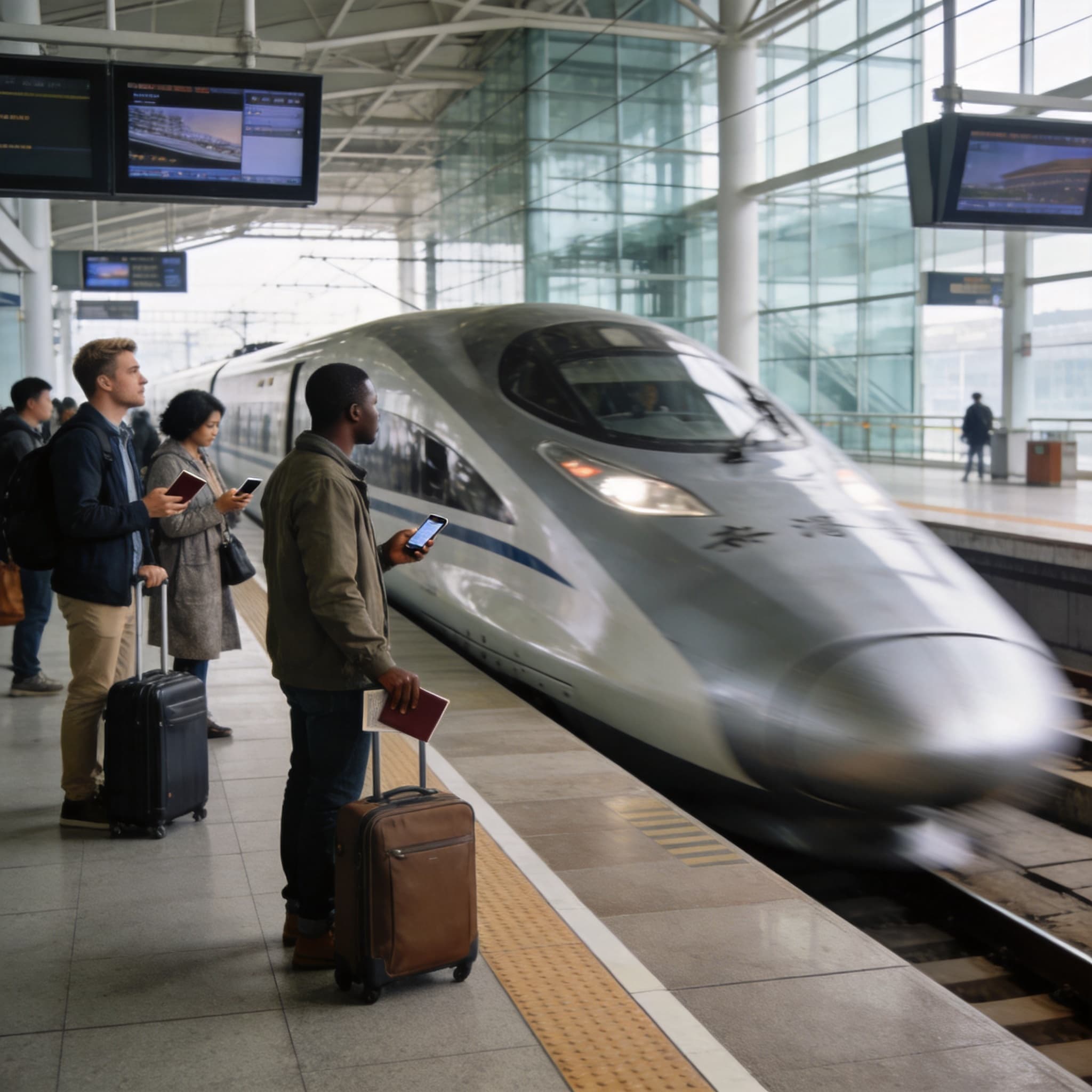
After entering the station, check the electronic departure board.
Match the following information:
- Train number
- Departure time
- Destination
- Boarding gate
- Current train status
Large stations may have multiple floors and dozens of gates. Follow the signs carefully and allow enough time to walk to the correct area.
Some departure boards alternate between Chinese and English. If you cannot find the English display, use the train number as the primary reference.
Boarding the Train
Boarding normally begins before departure when the gate opens.
At the boarding gate:
- Present or scan the passport used for the booking.
- Follow signs to the assigned platform.
- Check the train number again.
- Find the carriage number shown on the reservation.
- Board the correct carriage.
- Locate the assigned seat.
Platform markings often indicate where each carriage will stop. Standing near the correct carriage position makes boarding easier, especially if you have luggage.
During the Journey
Keep the passport available because railway staff may conduct ticket or identity checks.
Your reservation normally includes:
- Carriage number
- Seat number
- Seat class
Sit in the assigned seat unless a railway employee instructs otherwise.
Announcements and electronic displays commonly provide information about:
- The next station
- Arrival time
- Transfer instructions
- Safety reminders
English information is available on many high-speed trains, although the amount of English support varies.
Leaving the Destination Station
At the destination, you may need to scan or present the passport again at the exit gate.
Do not put the passport away until you have completely left the railway station.
If the automatic exit gate does not work, use a staffed lane.
3. Luggage Allowances on Chinese High-Speed Trains
Free Carry-On Allowance
The standard free luggage allowances are generally:
| Passenger category | Free luggage allowance |
|---|---|
| Most adult passengers | 20 kg |
| Children, including children traveling free | 10 kg |
| Diplomats | 35 kg |
For high-speed trains, the combined dimensions of each item are generally limited to:
Length + width + height no greater than 130 cm
An individual item should generally weigh no more than 20 kg.
Foldable wheelchairs used by travelers with disabilities are normally handled separately from the ordinary luggage allowance.
High-Speed Rail Is Not the Same as Air Travel
Ordinary luggage on Chinese high-speed trains is usually carried onto the train by the passenger.
There is normally no airline-style process where every large suitcase is checked in before boarding.
This means you should only bring luggage that you can:
- Move through a large station
- Carry up or down stairs if necessary
- Lift into an available storage area
- Manage while boarding and leaving the train
- Keep under control during the journey
Railway staff may refuse or restrict items that are excessively large, heavy, dangerous or disruptive.
Where to Store Your Luggage
Small and medium bags can usually be stored on the overhead racks.
Larger suitcases can often be placed:
- In the luggage area near the carriage entrance
- Behind the last row of seats, where designated
- In another marked luggage-storage space
Do not:
- Block an aisle
- Block a carriage door
- Place luggage in an emergency area
- Occupy another passenger’s seat
- Put a heavy suitcase on an overhead rack if it may fall
- Leave valuable items unattended
Storage space may be limited during busy travel periods. Boarding near the beginning of the boarding window can make it easier to find a suitable place for a large suitcase.
Protect Your Valuables
Keep the following items in a smaller bag close to you:
- Passport
- Wallet
- Phone
- Bank cards
- Medication
- Laptop or tablet
- Cameras
- Important travel documents
- Keys
Use a visible luggage tag because many suitcases look similar.
Before leaving the train, check:
- The overhead rack
- The luggage area
- The floor around your seat
- The seat pocket
- Charging outlets
- The space between and under the seats
Oversized or Excess Luggage
If luggage exceeds the official weight or size limits, contact the railway station or 12306 before traveling.
Some stations or routes may offer luggage consignment or delivery services, but availability and procedures can vary.
Do not assume that oversized luggage will be accepted simply because there is no airline-style baggage counter.
4. Restricted and Prohibited Items
Chinese railway stations inspect luggage for dangerous or restricted items.
The rules are not identical to airline-security rules, so an item permitted on a flight may still be restricted on a train, or vice versa.
Prohibited or controlled categories can include:
- Weapons and ammunition
- Explosives
- Fireworks
- Controlled knives
- Flammable liquids and gases
- Corrosive substances
- Toxic materials
- Radioactive materials
- Other items that may endanger railway safety
Power Banks and Spare Batteries
Power banks and spare lithium batteries should have clearly marked capacity information.
A commonly applied railway limit is:
No more than 100 Wh per clearly labeled power bank or spare battery
Do not carry:
- Damaged or swollen batteries
- Power banks with unreadable capacity labels
- Modified battery packs
- Units exceeding the permitted capacity without authorization
Because transport regulations can change, check the latest railway guidance before carrying an unusual or high-capacity battery.
Alcohol
Sealed and clearly labeled alcoholic drinks between 24% and 70% alcohol by volume are generally limited to a combined total of 3,000 ml.
Alcohol above 70% is prohibited.
Unlabeled or homemade alcoholic liquids may also be rejected because their contents and alcohol concentration cannot be verified.
Aerosols and Self-Pressurized Containers
Items such as hairspray and air freshener in self-pressurized containers may be limited to:
- 150 ml per container
- One of each permitted type
- 600 ml in total
Check container sizes before going to the station. The amount remaining inside the container may not matter if the labeled container capacity exceeds the permitted limit.
Perfume, Sprays and Gel Toiletries
Flammable perfume, spray or gel toiletries in non-self-pressurized containers may be limited to:
- 100 ml per container
- One of each permitted type
Travel-size toiletries are less likely to create problems at security screening.
Nail Polish and Remover
Nail polish and nail-polish remover may be subject to a combined limit of 50 ml.
Matches and Lighters
Passengers may generally carry no more than:
- Two small boxes of safety matches
- Two ordinary lighters
Other ignition devices may be prohibited.
Sharp Objects
Knives and other sharp tools may be prohibited or restricted depending on their design, blade, purpose and classification.
If you are unsure about an item, do not rely on personal assumptions. Ask 12306 or station staff before travel.
5. Food, Drinks and Onboard Facilities
Passengers may generally bring ordinary food and non-alcoholic drinks, provided they do not create a safety or hygiene problem.
Practical options include:
- Bottled water
- Sandwiches
- Fruit
- Packaged snacks
- Instant meals
- Food purchased inside the railway station
Avoid food with an extremely strong smell, especially in a crowded carriage.
Some trains sell food and drinks onboard, but selection, availability and payment methods vary. Buying supplies before boarding is often more reliable.
Hot water is commonly available on many trains, but passengers should handle it carefully.
Toilets
High-speed trains normally have toilets in each carriage or between adjacent carriages.
Facilities may include:
- Western-style toilets
- Squat toilets
- Accessible toilets on selected trains
- Sinks
- Baby-changing facilities on some services
Carry tissues and hand sanitizer as a precaution.
Power and Charging
Many high-speed trains provide power outlets or USB charging ports, but the location and type depend on the train model and seat class.
Bring a charging cable and keep a power bank within railway limits.
Do not rely on having a working outlet throughout the journey.
6. Changing, Cancelling or Missing a Train
Changing a Ticket
Ticket-change conditions depend on:
- The departure time
- Seat availability
- The new train
- The ticket type
- Current railway rules
Use the original booking platform whenever possible. If the ticket was purchased through an intermediary, the change may need to be processed through that company rather than directly through 12306.
Cancelling a Ticket
Refund fees may depend on how close the cancellation is to departure.
Review the current refund conditions before confirming a booking, especially if your itinerary may change.
Missing the Train
If you miss the train, go immediately to a railway service counter.
Whether the ticket can be changed depends on the current rules, timing and seat availability. Do not buy a replacement immediately without first asking whether the original reservation can still be handled.
7. Common Problems and How to Solve Them
Passport Verification Fails Online
Try the following:
- Check the spelling and order of the name.
- Confirm the passport number.
- Check the nationality and expiration date.
- Upload clear images of the passport bio page.
- Wait for manual verification.
- If the problem continues, visit a station ticket counter with the original passport.
Complete this process before the travel day whenever possible.
The Passport Will Not Scan at the Gate
Move to a staffed or manual inspection lane.
Show:
- The original passport
- Train number
- Departure time
- Booking confirmation
A failed automatic scan does not automatically mean the ticket is invalid.
The Reservation Does Not Match the Passport
Visit a ticket counter before boarding.
Do not depend on a screenshot, photocopy or printed itinerary to solve an identity mismatch. Railway staff may need to correct or reissue the reservation according to the applicable rules.
You Went to the Wrong Station
Check the reservation immediately and calculate the travel time to the correct station.
In large cities, changing stations may take an hour or longer. If reaching the correct station before boarding closes is impossible, contact the booking platform or railway service counter to explore change or refund options.
You Cannot Find the Boarding Gate
Use the train number rather than relying only on the destination.
Ask railway staff by showing the reservation on your phone. The train number is usually the fastest way to identify the correct gate.
Your Luggage Is Oversized
Ask station staff about:
- Consignment services
- Luggage delivery
- Alternative train arrangements
- Whether the item can be accepted under special handling rules
Resolve the issue before reaching the boarding gate.
8. Useful Chinese Phrases for Railway Travel
Keep these phrases on your phone:
-
请问,高铁站在哪里?
Qǐngwèn, gāotiě zhàn zài nǎlǐ?
Where is the high-speed railway station? -
这是我的护照和订单。
Zhè shì wǒ de hùzhào hé dìngdān.
Here are my passport and booking details. -
我的护照刷不了。
Wǒ de hùzhào shuā bù liǎo.
My passport will not scan. -
人工通道在哪里?
Réngōng tōngdào zài nǎlǐ?
Where is the staffed lane? -
这个车在哪个检票口?
Zhège chē zài nǎge jiǎnpiàokǒu?
Which boarding gate is this train at? -
这是去北京的车吗?
Zhè shì qù Běijīng de chē ma?
Is this the train to Beijing? -
我的座位在哪里?
Wǒ de zuòwèi zài nǎlǐ?
Where is my seat? -
我走错车站了。
Wǒ zǒu cuò chēzhàn le.
I went to the wrong station. -
我错过火车了。
Wǒ cuòguò huǒchē le.
I missed my train. -
我可以改签吗?
Wǒ kěyǐ gǎiqiān ma?
Can I change my ticket?
9. Pre-Travel Checklist
Before Booking
- Confirm the exact departure station.
- Confirm the exact arrival station.
- Check that the passport will remain valid.
- Enter the passport name and number exactly as printed.
- Complete 12306 identity verification early.
- Check the train number, date, time and seat class.
- Review the change and refund conditions.
Before Going to the Station
- Carry the original passport used for booking.
- Save the booking confirmation offline.
- Take a screenshot of the train details.
- Check the route to the correct station.
- Allow extra time for security and passport inspection.
- Weigh large luggage if it may be close to the limit.
- Check that each high-speed rail luggage item complies with the 130 cm combined-dimension limit.
- Review restrictions on batteries, aerosols, alcohol and sharp objects.
- Charge your phone and prepare an approved power bank if needed.
At the Station
- Check the station name before entering.
- Put all bags through security screening.
- Use a staffed lane if the passport does not scan.
- Match the train number on the departure board.
- Find the correct waiting area and boarding gate.
- Keep the passport accessible.
- Board the correct carriage.
- Store luggage without blocking the aisle or doors.
Before Leaving the Train
- Check the overhead rack.
- Check the luggage-storage area.
- Check the seat pocket.
- Collect charging cables and electronic devices.
- Keep the passport ready for the exit gate.
- Confirm that the destination is correct before leaving.
Final Advice
Traveling by high-speed rail in China is usually easy once your identity information has been verified.
Remember three essential rules:
- Book the ticket using passport details that exactly match the original document.
- Carry that original passport from station entry until you have left the destination station.
- Keep luggage within the applicable weight, size and restricted-item limits.
Complete passport verification before the travel day, arrive early enough for security and possible manual identity checks, and use a staffed gate whenever an automatic passport reader does not work.
With these preparations, foreign travelers can use China’s high-speed rail network confidently and efficiently.
Advertisement
ChinaTravel Editorial Desk
Maintains practical destination and trip-planning information for English-speaking visitors. Time-sensitive details should be checked with official sources.
Compare Current Trip Options
Check live availability and the provider's current terms before booking.
Compare China Trip OptionsSponsored link — we may earn a commission at no extra cost to you.