China Travel Costs
China can be cheap, moderate, or surprisingly expensive depending on how you move around. A clean budget trip is possible. So is a comfortable one that still does not feel extravagant. The difference usually comes down to three things: where you sleep, how often you take taxis, and whether you keep changing cities.
The useful way to budget China in 2026 is to think in RMB per person per day, then add long-distance transport separately. Prices in Beijing, Shanghai, Shenzhen, and other major hubs are still higher than in smaller inland cities, and holiday weeks can push hotel rates up fast.
Daily budget at a glance
| Travel style | Typical daily spend | What that usually buys |
|---|---|---|
| Shoestring | 250-450 RMB | Hostel bed or simple guesthouse, local food, metro, one low-cost attraction |
| Budget but comfortable | 450-800 RMB | Private room in a basic hotel, mixed local meals, metro plus a few taxis |
| Mid-range | 800-1,600 RMB | Good 3-star or 4-star hotel, varied meals, paid sights, some ride-hailing |
| Upscale | 1,600-3,500+ RMB | Better hotels, airport transfers, nicer dinners, more taxi use |
If you are only visiting one region and you travel light, China is often cheaper than people expect. If you are crossing the country every few days, the budget climbs quickly.
Accommodation
Hotels are where China budgets start to diverge. A room in a central district of Shanghai or Beijing can cost much more than the same standard in Chengdu, Xi’an, or Kunming. The gap gets even wider on weekends, holidays, and near major sights.
Typical current planning ranges:
- Hostel dorm bed: 60-150 RMB
- Basic private room or local budget hotel: 180-350 RMB
- Reliable 3-star to solid 4-star hotel: 350-700 RMB
- Better 4-star or boutique hotel: 700-1,500 RMB
- Luxury hotel: 1,500 RMB and up
A few practical rules help more than chasing a brand name. Stay near a metro line, not necessarily right on top of the landmark. In cities like Shanghai and Beijing, that single choice can save more than breakfast does. If you are traveling during Spring Festival, Labor Day, or National Day, book early or expect weaker value.
Food
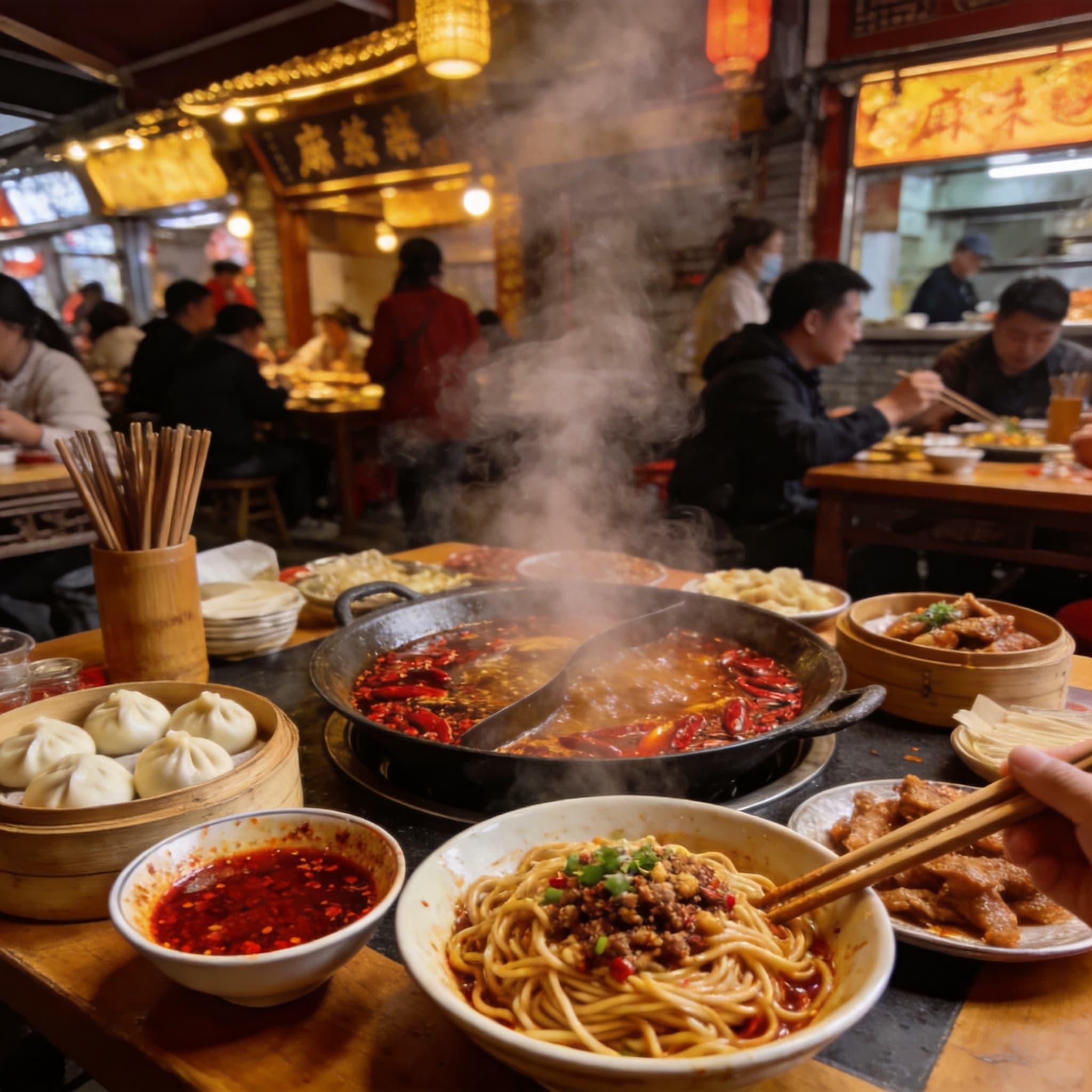
Food in China is flexible enough that you can spend very little without eating badly. The expensive part is usually not the meal itself, but where you choose to eat. Airport restaurants, hotel cafes, and tourist streets are the fastest way to burn money.
Typical prices:
- Simple breakfast: 10-25 RMB
- Noodles, rice bowl, dumplings, or a set lunch: 20-45 RMB
- Casual sit-down meal: 40-80 RMB
- Nice local dinner: 100-250 RMB
- Coffee: 18-35 RMB
- Beer: 10-30 RMB
If you mix local breakfast places, simple noodle shops, and one better dinner a day, food stays very manageable. For many travelers, a realistic food budget is 80-200 RMB/day without trying too hard.
Transport
City transport
China’s metro systems are one of the easiest places to save money. Most inner-city rides are cheap, and the fare structures in major cities are still very traveler-friendly.
Examples from current fare systems:
- Beijing subway: starts at 3 RMB, with the airport express at 25 RMB
- Shanghai metro: starts at 3 RMB, with most rides still in the single digits and the top end reaching 15 RMB
- Shenzhen metro: generally 2-15 RMB depending on distance
In practice, a normal day of metro travel in a big city usually costs only 6-20 RMB.
Taxis and ride-hailing
Short city rides are not outrageous, but they add up if you use them casually.
Typical planning range:
- Short hop: 15-30 RMB
- Cross-town ride: 30-80 RMB
- Airport transfer: 80-200+ RMB, depending on city and distance
If your hotel is a long walk from the nearest station, expect your transport budget to creep up without much visible improvement in comfort.
High-speed rail
High-speed rail is usually the smartest way to move between major cities. It is fast, reliable, and often cheaper than flying once you count airport transfers and wasted time.
Plan roughly:
- Short intercity hops: 50-150 RMB
- Medium routes: 150-400 RMB
- Long routes and premium classes: 400-1,000+ RMB
Exact prices depend on distance, train type, and class. The same corridor can cost more or less depending on the schedule, so do not budget from a single screenshot.
Domestic flights
Flights are the biggest swing item in a China trip budget. They can be cheap off-peak, then jump sharply around holidays.
Rough planning range:
- Short domestic flight: 300-800 RMB
- Busy trunk route or holiday departure: 800-1,500+ RMB
If your trip is under about 800 km between major cities, high-speed rail is often the better deal overall.
What a 7-day trip can cost
Per person, excluding international airfare:
- Lean trip: 2,000-4,000 RMB
- Comfortable budget trip: 4,500-8,000 RMB
- Mid-range trip: 8,000-15,000 RMB
- Higher-end trip: 15,000 RMB+
That assumes you are not buying a new intercity flight every day. Add more if you are traveling in peak season, staying in central luxury hotels, or doing a lot of private transfers.
Where people overspend
- Booking a hotel too close to a famous street and paying for the location premium without using it.
- Taking taxis for every movement instead of using the metro for the easy legs.
- Changing cities too often instead of staying longer in one region.
- Eating every meal in tourist zones.
- Traveling during Golden Week or Spring Festival and then acting surprised by the hotel bill.
How to save money without making the trip miserable
- Build a regional trip instead of a cross-country sprint.
- Use the metro for routine city movement and save taxis for late-night or awkward routes.
- Book intercity rail early, especially for popular corridors.
- Stay one or two metro stops away from the most expensive central districts.
- Eat where office workers eat, not only where other travelers eat.
- Travel in shoulder season if your dates are flexible.
- Avoid the obvious peak windows: Spring Festival, Labor Day, and National Day.
- Use one city as a base and do day trips from there when possible.
Bottom line
For most travelers, China is not a budget problem if the route is sane. A solid trip is usually possible on 450-800 RMB per day, and a comfortable trip often lands around 800-1,600 RMB per day before long-haul transport. The fastest way to blow the budget is not food. It is usually hotel location, domestic flights, and overpacking the itinerary.
Pricing notes
This guide uses current 2026 planning ranges and recent fare structures from major Chinese city transit systems, China Railway booking patterns, and current holiday timing. Exact hotel and flight prices move too fast to treat as fixed.
Advertisement
ChinaTravel Editorial Desk
Maintains practical destination and trip-planning information for English-speaking visitors. Time-sensitive details should be checked with official sources.