Shanghai is the most international city in mainland China and still the easiest first stop for many overseas travelers. The best Shanghai itinerary mixes headline landmarks with neighborhood citywalks: skyline views on the Bund and in Lujiazui, classical gardens around Yuyuan, old-meets-new streets in the Former French Concession, and newer museum-led trips in Pudong and Lingang. This guide focuses on the major internationally known Shanghai attractions that recur most often in official tourism material and current English-language travel planning.
As of May 30, 2026, the latest English-language and official tourism coverage points to a few clear travel trends. First, first-time visitors still center their plans on the Bund, Yuyuan Garden, Nanjing Road, Lujiazui, and Shanghai Disneyland. Second, citywalk culture has become a major part of modern Shanghai travel, especially around Wukang Road, Anfu Road, Suzhou Creek, the North Bund, and heritage-commercial districts that blend architecture, cafes, shopping, and local life. Third, independent inbound travel keeps growing, supported by easier visa-free or transit policies, wider foreign card acceptance, tax-refund upgrades, and a bigger push toward immersive neighborhood experiences rather than only checklist sightseeing.
Latest Shanghai travel trends in 2026
1. Classic icons still anchor almost every first trip
The Bund, Yuyuan Garden, Nanjing Road, Lujiazui, Shanghai Tower, the Oriental Pearl Tower, and a Huangpu River cruise remain the standard core for English-language Shanghai itineraries. If someone has only one or two days in the city, these are still the places most likely to define the trip.
2. Citywalk routes are now mainstream
Shanghai tourism promotion now leans heavily into walkable district experiences instead of only isolated attractions. The biggest winners are Wukang Road, Wukang Mansion, Anfu Road, Xintiandi, Zhangyuan, the Hengfu heritage area, Suzhou Creek, and the North Bund. These places work especially well for travelers who want architecture, cafes, photos, boutique shopping, and a more lived-in version of Shanghai.
3. Museum and culture itineraries are stronger than before
Shanghai Museum East, the Shanghai Astronomy Museum, the China Art Museum area, and the broader Pudong museum circuit are appearing more often in current official routes. This means Shanghai is no longer just a skyline-and-shopping destination. It is increasingly sold as a museum city.
4. Family and leisure travel keep expanding
Shanghai Disneyland remains one of the city’s strongest drawcards for international visitors, and family-friendly side trips continue to grow around Pudong and Lingang. Travelers are more likely now to pair Disney with museums, riverfront walks, and a water-town day trip than to spend their whole stay only in the historic center.
5. Easier arrival is feeding more independent travel
Recent official coverage emphasizes visa-free or 240-hour transit convenience, better multilingual services, foreign card acceptance at major attractions, and smoother payment and tax-refund systems. In practical terms, that makes Shanghai easier to visit without a package tour, and it helps explain why the city is pushing more self-guided routes and neighborhood discovery.
The most famous travel sites in Shanghai
The Bund
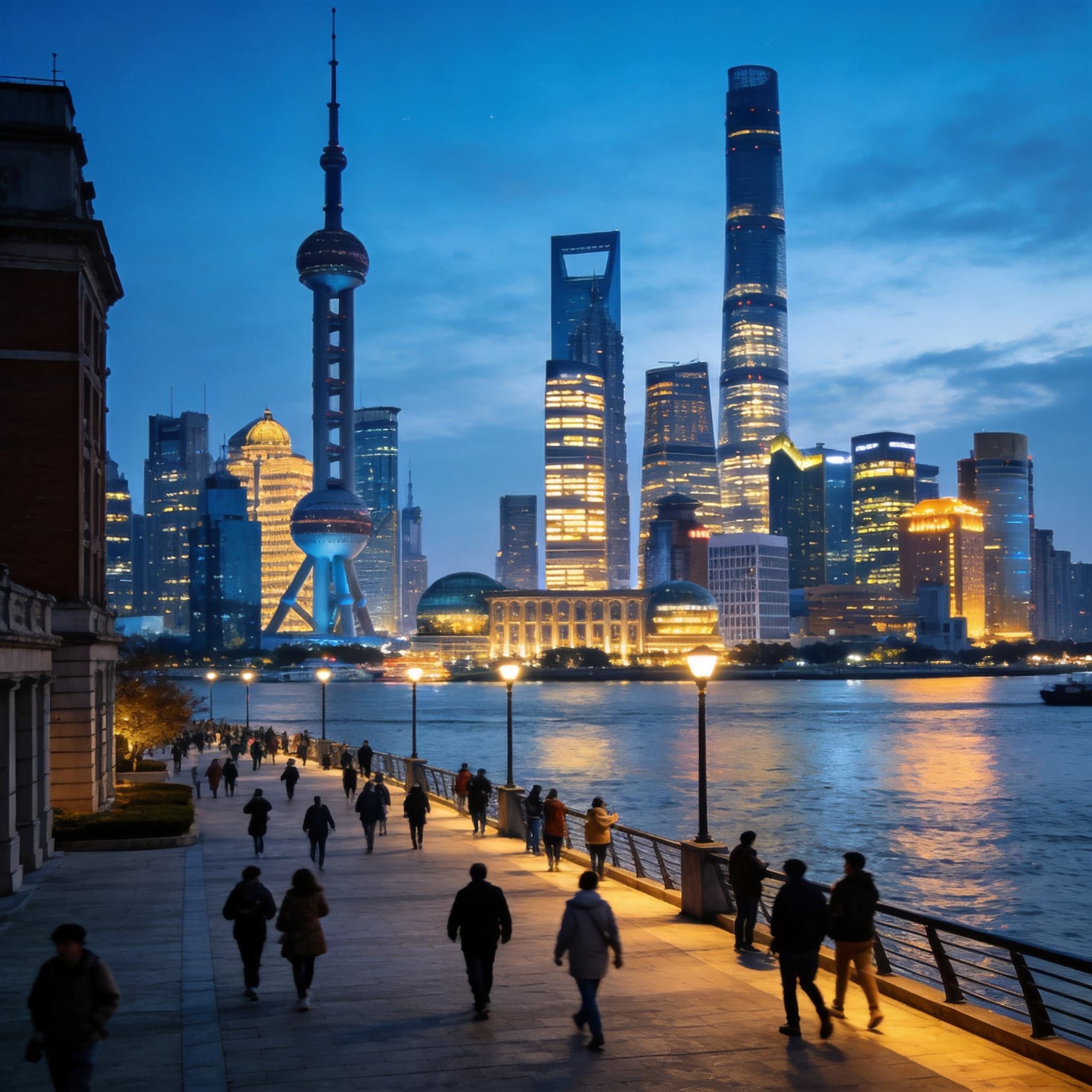
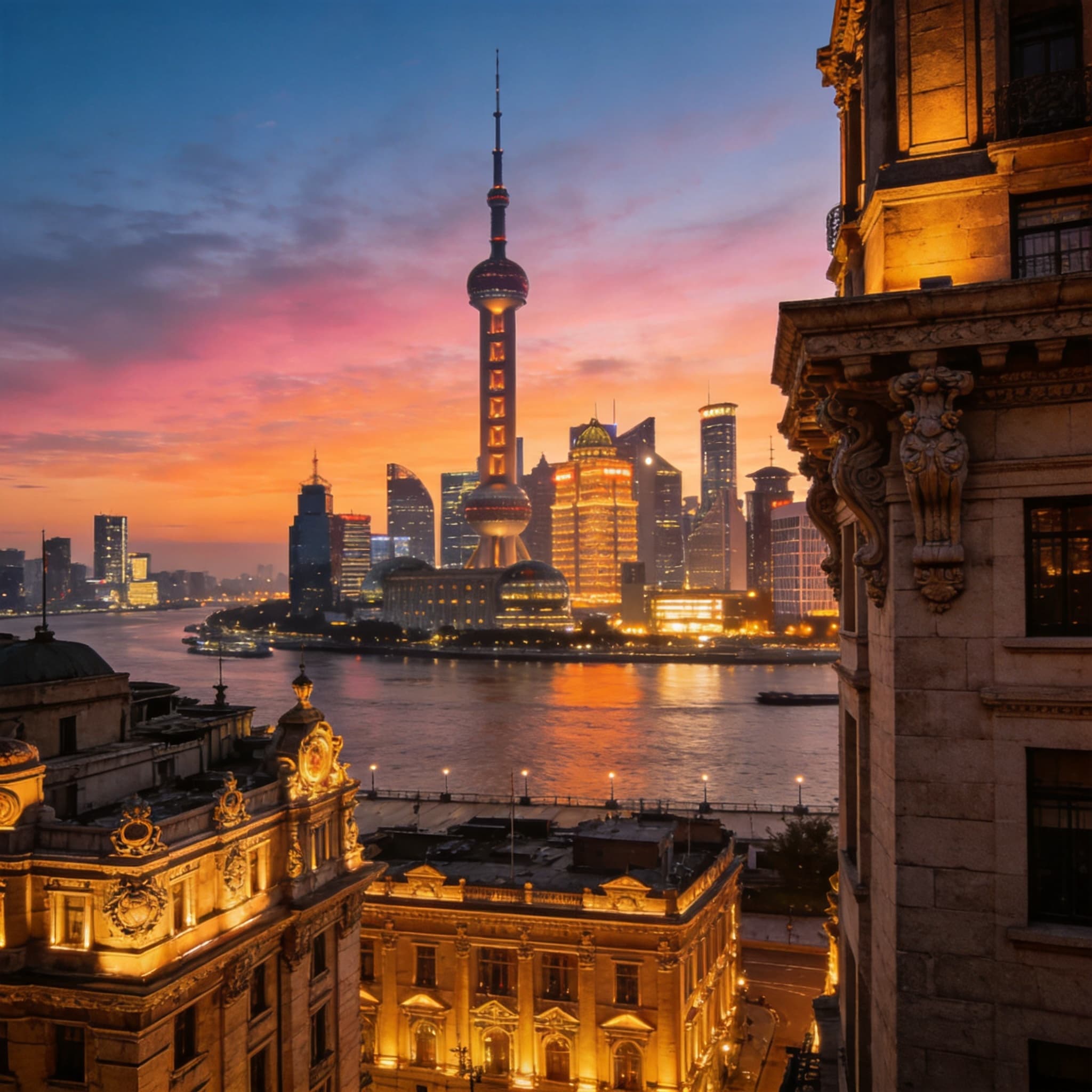
The Bund is still Shanghai’s signature image: a waterfront promenade lined with grand colonial-era architecture facing the futuristic Pudong skyline across the Huangpu River. It is the single most recognizable place in the city for first-time visitors, especially at sunrise, sunset, and after dark when the skyline lights come on. If you only visit one place in Shanghai, this is the essential stop.
Huangpu River Cruise
A Huangpu River cruise is the fastest way to understand Shanghai’s visual identity. You see the historic Bund facades on one side and the glass-and-steel towers of Pudong on the other, all in one continuous panorama. Night cruises are especially popular and remain one of the city’s most marketable experiences in official tourism materials.
Lujiazui Financial District
Lujiazui is the ultra-modern face of Shanghai: skyscrapers, malls, observation decks, and riverfront viewpoints gathered in one district in Pudong. This is where visitors go to experience the “future city” side of Shanghai. It pairs naturally with the Bund because the two skylines define each other.
Shanghai Tower
Shanghai Tower is the tallest building in China and one of the most famous skyscrapers in the world. For many travelers, the main reason to come is the observation deck and the feeling of looking down over the entire city, river curves, bridges, and dense urban grid. It is one of the strongest modern landmarks in Shanghai and often appears in flagship one-day and multi-day routes.
Oriental Pearl Tower
The Oriental Pearl Tower remains one of Shanghai’s most recognizable structures thanks to its sphere-stacked silhouette. Even travelers who do not go up the tower usually photograph it from the Bund, Lujiazui, or a river cruise. It is both a viewing point and an icon in its own right.
Jin Mao Tower and the Shanghai World Financial Center
These two neighboring towers are often overshadowed by Shanghai Tower, but they are still central to the Lujiazui skyline and remain famous in their own right. Jin Mao gives Shanghai one of its most elegant postmodern silhouettes, while the Shanghai World Financial Center is well known for its trapezoid opening near the top and its high observation deck views.
Yuyuan Garden and the City God Temple Bazaar
Yuyuan Garden is Shanghai’s classic Chinese garden experience, with pavilions, rockeries, ponds, zigzag bridges, and traditional Jiangnan-style landscaping. The surrounding bazaar and City God Temple area add lanterns, snack streets, old-style roofs, souvenir shops, and one of the busiest tourist atmospheres in the city. For overseas travelers who want “traditional Shanghai” in a compact, high-energy area, this is the obvious choice.
Nanjing Road Pedestrian Street
Nanjing Road Pedestrian Street is Shanghai’s most famous commercial street and one of the best-known shopping streets in China. It is usually combined with the Bund because the eastern end flows naturally toward the waterfront. Even travelers who are not focused on shopping often come for the lights, crowds, historic department-store legacy, and big-city energy.
People’s Square
People’s Square is a central landmark area rather than a single monument. It works as a hub for museums, civic buildings, public space, and easy metro connections. For many visitors, it is the practical center of daytime sightseeing in old central Shanghai.
Shanghai Museum
The Shanghai Museum at People’s Square remains one of the city’s most important cultural institutions, especially for Chinese bronzes, ceramics, calligraphy, painting, jade, seals, and classical decorative arts. It is one of the best places in Shanghai to add historical depth to an itinerary dominated by skyline views and shopping districts.
Shanghai Museum East
Shanghai Museum East is one of the most important newer additions to Shanghai’s sightseeing map and a strong sign of the city’s museum push. It increasingly appears in current official visitor routes and gives travelers another major reason to spend time in Pudong beyond towers and malls. If your guide aims to reflect the latest Shanghai travel trend rather than only legacy landmarks, this belongs on the list.
Shanghai Urban Planning Exhibition Center
This is one of the best places to understand how Shanghai grew from treaty-port city to one of the world’s largest modern metros. It is especially useful for travelers who want context before exploring the Bund, Lujiazui, and the wider urban core. It appears often in longer official culture-focused itineraries.
Former French Concession
The Former French Concession is one of the most loved areas among international travelers because it offers a slower, greener, more residential side of Shanghai. Plane trees, historic villas, low-rise lanes, boutique hotels, coffee shops, bakeries, bars, and independent stores make it ideal for people who prefer walking and atmosphere over major monuments. It is also the district most associated with modern citywalk culture.
Wukang Road and Wukang Mansion
Wukang Road is the standout citywalk address in today’s Shanghai travel scene. Visitors come for historic architecture, sycamore-lined streets, stylish storefronts, and the photogenic Wukang Mansion, one of the city’s best-known heritage buildings. If the Bund is the classic postcard, Wukang Road is the current social-media Shanghai favorite.
Anfu Road and the Hengfu Heritage Area
Anfu Road and the broader Hengfu area are where many travelers go after Wukang Road. The appeal is not one giant attraction but the mix of independent boutiques, coffee culture, street fashion, and elegant historic streets. This zone reflects a major current travel trend: Shanghai as a city to browse and walk, not only to tick off landmarks.
Xintiandi
Xintiandi is one of Shanghai’s most successful urban-renewal districts, known for restored shikumen stone-gate houses converted into restaurants, cafes, nightlife venues, and retail spaces. It remains one of the easiest places for first-time visitors to experience a polished blend of old Shanghai building style and modern lifestyle branding. It is especially popular in evening itineraries.
Tianzifang
Tianzifang is a dense lane network of studios, shops, snack stops, and tourist-oriented creative storefronts in a preserved alleyway setting. It is more crowded and commercial than Wukang Road, but it remains one of the most famous Shanghai stops for visitors who want narrow lanes, old brick textures, gift shopping, and easy wandering.
Zhangyuan
Zhangyuan has become one of the more prominent heritage-commercial names in current tourism promotion. It represents another side of central Shanghai’s redevelopment story, where restored historic architecture meets luxury retail, food, and lifestyle branding. It fits especially well for travelers interested in modern Shanghai consumption spaces built around preserved urban fabric.
Jing’an Temple
Jing’an Temple is one of the most prominent Buddhist temples in the city and one of the easiest temple visits to fit into a central itinerary. Its golden roofs rising from a modern commercial district create one of Shanghai’s strongest visual contrasts between sacred tradition and high-end urban life. It also sits near shopping, hotels, and citywalk-friendly streets, which helps keep it highly visible in travel planning.
Jade Buddha Temple
Jade Buddha Temple is one of Shanghai’s best-known religious sites and a core stop for visitors looking for a quieter, more spiritual counterpoint to the city’s skyline and retail zones. It is famous for its jade Buddha statues and remains a standard part of many classic full-day Shanghai tours.
Longhua Temple and Longhua Pagoda
Longhua Temple is one of the oldest and most historically significant Buddhist sites in Shanghai. The temple and pagoda bring a deeper historical layer than many of the city’s more famous modern attractions. It appears more often now in broader official itineraries, especially when the guide tries to show that Shanghai is older and more complex than its skyline suggests.
Shanghai Disneyland
Shanghai Disneyland is one of the biggest tourism magnets in the city and one of the strongest family-travel anchors in eastern China. It is no longer just an optional side trip for theme-park fans. In many current official routes, it stands alongside the Bund and Yuyuan as a headline attraction. For families, couples, and repeat visitors who already know central Shanghai, it is often a full-day priority.
Disneytown and the wider Shanghai Disney Resort area
Even for travelers who are not doing the full park day, the Shanghai Disney Resort area has become an established leisure zone. Disneytown adds dining, shopping, and a more relaxed atmosphere around the resort. It works well for travelers who want a lighter Disney stop or an evening visit after a daytime park itinerary.
Zhujiajiao Ancient Town
Zhujiajiao is the most famous water-town day trip from Shanghai and one of the most consistently promoted add-ons in official routes for foreign visitors. Stone bridges, canals, old streets, boat rides, teahouses, and waterside houses give travelers a classic Jiangnan setting within reach of the city. If a visitor has already covered central Shanghai, Zhujiajiao is usually the first recommended excursion.
Qibao Ancient Town
Qibao is another popular ancient-town option inside the wider Shanghai urban area. It is easier and faster to reach than some outer day trips and works well for travelers who want a compact canal-town atmosphere, local snacks, and traditional architecture without spending a full day outside the city center.
Shanghai Astronomy Museum
The Shanghai Astronomy Museum is one of the city’s most notable newer cultural attractions and an increasingly important reason to travel to the Lingang area. It appeals to families, science fans, architecture lovers, and travelers who want something more contemporary than the classic Bund-Yuyuan circuit. For trend-aware travel writing, it is one of the strongest “new Shanghai” inclusions.
China Art Museum
Housed in the former China Pavilion from Expo 2010, the China Art Museum is a major visual landmark and one of the city’s key large-scale museums. It is especially relevant for visitors interested in modern Chinese art, exhibition architecture, and the long afterlife of the Expo site in Shanghai’s tourism identity.
Shanghai History Museum
Shanghai History Museum helps visitors understand how the city developed socially, commercially, and culturally across different eras. It works particularly well in combination with the Bund, People’s Square, or the Oriental Pearl area. For guides aimed at first-time overseas visitors, it is a valuable bridge between flashy skyline imagery and deeper urban context.
Suzhou Creek
Suzhou Creek has become one of Shanghai’s clearer citywalk and urban-renewal stories. Warehouses, bridges, converted industrial spaces, museums, riverside promenades, and historical memory all come together here. It appeals to travelers who want to move beyond the most obvious landmarks without losing access to central scenery and architecture.
North Bund and Waibaidu Bridge
The North Bund is gaining more attention as a modern riverfront district with strong skyline views back toward Lujiazui and the Bund. Waibaidu Bridge, where the Suzhou Creek meets the Huangpu River, remains one of the city’s classic photo points and an easy transition point between older historic Shanghai and newer waterfront redevelopment.
Xujiahui and St. Ignatius Cathedral
Xujiahui is a major commercial and cultural district with one of Shanghai’s best-known churches, St. Ignatius Cathedral. It is not as central to first-time postcard tourism as the Bund or Yuyuan, but it remains one of the city’s famous landmark districts, especially for architecture and religion-focused travelers.
Shanghai Jewish Refugee Museum
For visitors interested in World War II history and Shanghai’s international past, the Shanghai Jewish Refugee Museum is one of the city’s most meaningful specialist sites. It appears frequently in longer official itineraries and helps widen the usual narrative beyond shopping streets and skyscrapers.
Additional famous Shanghai places worth adding to a longer guide
M50 Creative Park
M50 is one of Shanghai’s best-known contemporary art clusters and a frequent recommendation for travelers who want gallery-hopping in a former industrial setting.
West Bund
West Bund has grown into one of the city’s stronger art-and-riverfront districts, combining museums, event spaces, long promenades, and a more modern cultural atmosphere.
1933 Old Millfun
1933 Old Millfun is a niche but visually striking heritage site, known for its dramatic concrete design and unusual industrial architecture.
Shanghai Ocean Aquarium
For family travelers staying around Lujiazui, the Shanghai Ocean Aquarium remains one of the best-known easy add-ons near the major skyline attractions.
Sheshan
Sheshan is a well-known outer-area escape for travelers who want a greener side of Shanghai, with hillside scenery, religious architecture, and a slower pace than the urban core.
Best area-by-area way to organize the famous sites
Central historic core
Bundle these together in one trip: the Bund, Nanjing Road Pedestrian Street, People’s Square, the Shanghai Museum, Yuyuan Garden, the City God Temple area, and optionally a Huangpu River cruise at night.
Pudong skyline and mega-attractions
Keep these together on another day: Lujiazui, Shanghai Tower, Oriental Pearl Tower, Jin Mao Tower, the Shanghai World Financial Center, Shanghai Museum East, and if you want a longer outing, the Shanghai Astronomy Museum in Lingang.
French Concession and citywalk Shanghai
This is the best zone for a slower day: Wukang Road, Wukang Mansion, Anfu Road, the Hengfu heritage streets, Xintiandi, Tianzifang, and nearby cafe and shopping detours.
Temple and heritage route
A good culture-heavy route combines Jing’an Temple, Jade Buddha Temple, Longhua Temple, Zhangyuan, and the Shanghai Urban Planning Exhibition Center.
Best day trips
Zhujiajiao is the strongest classic day trip. Qibao is the easier short-version alternative. Shanghai Disneyland is a full separate day rather than a side stop.
Suggested editorial angle for English-language readers
If this guide is meant for an English-speaking international audience, the strongest angle is not “Shanghai has many attractions.” That is too generic. A better positioning is this: Shanghai is where a visitor can see old China, colonial-era urban history, futuristic skyscrapers, Buddhist temples, luxury shopping, walkable cafe districts, major museums, and a world-class theme park in one city. Few destinations in Asia combine those layers as cleanly as Shanghai.
Conclusion
The most famous travel sites in Shanghai still begin with the Bund, Yuyuan Garden, Nanjing Road, Lujiazui, Shanghai Tower, the Oriental Pearl Tower, and Shanghai Disneyland. But the latest travel pattern in 2026 is broader than that. The city is increasingly experienced through citywalk districts like Wukang Road and Xintiandi, culture stops like Shanghai Museum East and the Shanghai Astronomy Museum, and high-quality add-ons such as Zhujiajiao, Suzhou Creek, and temple routes. A strong modern Shanghai guide should cover both the iconic checklist and the newer neighborhood-based way people are actually traveling through the city.
Advertisement
Planning a trip to Shanghai?
Check out our complete Shanghai destination guide with everything you need to know.
ChinaTravel Editorial Desk
Maintains practical destination and trip-planning information for English-speaking visitors. Time-sensitive details should be checked with official sources.