Planning your first trip to Chengdu and not sure where to start? This Chengdu travel guide for first timers is designed for travelers who want a practical, easy-to-follow route without wasting time going back and forth across the city.
This 3 day Chengdu itinerary covers the city’s classic highlights: giant pandas, Chunxi Road, Taikoo Li, ancient temples, red-wall photo spots, local teahouses, night markets, food streets, and the laid-back neighborhood vibe that makes Chengdu so memorable. If you are wondering where to go in Chengdu for the first time, follow this route for a smooth and balanced Chengdu trip.
3-Day Chengdu Itinerary Overview
Day 1: Chunxi Road → Taikoo Li → Daci Temple → People’s Park → Kuanzhai Alley
Focus: downtown landmarks, Chengdu’s slow-paced lifestyle, old teahouses, red-wall photo spots, and Sichuan opera face-changing.
Day 2: Chengdu Research Base of Giant Panda Breeding → Wenshu Monastery → Wuhou Shrine → Jinli → Fuqin Night Market
Focus: pandas, ancient temples, Three Kingdoms culture, night-market snacks, and practical Chengdu panda base travel tips.
Day 3: Eastern Suburb Memory → Jianshe Road → Chengdu Museum → Qingyang Palace → Yulin Road
Focus: industrial-style photo spots, local food streets, museums, Taoist temples, teahouses, and Yulin nightlife.
This route works well as a Chengdu travel itinerary without backtracking, especially for first-time visitors who want to see the best things to do in Chengdu in 3 days.
Day 1: Classic Downtown Chengdu Walking Route
Day 1 is a relaxed downtown route that combines modern shopping districts, historic temples, local tea culture, and one of Chengdu’s most famous old streets. It is ideal if you want a soft landing after arriving in the city.
1. Chunxi Road
Opening hours: All day
Admission: Free
Highlights:
Chunxi Road is often called the “center of the universe” in Chengdu. The climbing panda on top of IFS is one of the most iconic photo spots in the city and a must-see for first-time visitors.
If you get tired of shopping malls, walk into the nearby side streets to find older cafés and teahouses. This contrast between modern commerce and local daily life is exactly what makes downtown Chengdu interesting.
Next stop: Taikoo Li
About 11 minutes on foot
2. Taikoo Li
Opening hours: All day
Admission: Free
Highlights:
Taikoo Li is one of the best places to experience Chengdu’s stylish urban side. Gray bricks, tiled roofs, luxury boutiques, cafés, and open-air courtyards create a modern Chinese aesthetic that is very photogenic.
For travelers searching for a Chunxi Road Taikoo Li Chengdu itinerary, this stop is easy to combine with Chunxi Road and Daci Temple because all three are close to one another.
Next stop: Daci Temple
About 2 minutes on foot
3. Daci Temple
Opening hours: 7:30–17:00
Admission: Free
Highlights:
Daci Temple is a peaceful Buddhist temple hidden inside the Taikoo Li area. Its red walls and yellow tiles make it a great photo spot, but the atmosphere is still calm and restful.
If you want to see Chengdu’s slower side without leaving the city center, this is a perfect short stop.
Next stop: People’s Park
About 15 minutes by metro
4. People’s Park
Opening hours: 6:00–22:00
Admission: Free
Highlights:
People’s Park is one of the best places to experience Chengdu’s slow life. Order a bowl-style covered tea at Heming Teahouse, sit in the sun, and watch locals chat, play cards, and relax.
For anyone looking for a People’s Park Chengdu tea house guide or a classic Chengdu slow life tea house experience, this is the place to go.
Next stop: Kuanzhai Alley
About 7 minutes on foot
5. Kuanzhai Alley
Opening hours: All day
Admission: Free
Highlights:
Kuanzhai Alley is one of Chengdu’s most famous historic districts. However, don’t only stay on the main tourist street. Walk into Pao Tong Shu Street for artsy cafés, or Xiao Tong Alley to see a more local side of the neighborhood.
In the evening, you can watch a Sichuan opera face-changing show at Kuanzhai Courtyard for around RMB 80 per person. It is a good choice if you want a cultural experience without adding too much extra travel time.
Day 2: Pandas, Ancient Temples, Three Kingdoms Culture and Night Market Food
Day 2 is the most classic route for first-time visitors. It combines Chengdu’s famous pandas with temples, history, old streets, and one of the city’s most local night markets.
1. Chengdu Research Base of Giant Panda Breeding
Opening hours: 7:30–18:00
Admission: RMB 55
Highlights:
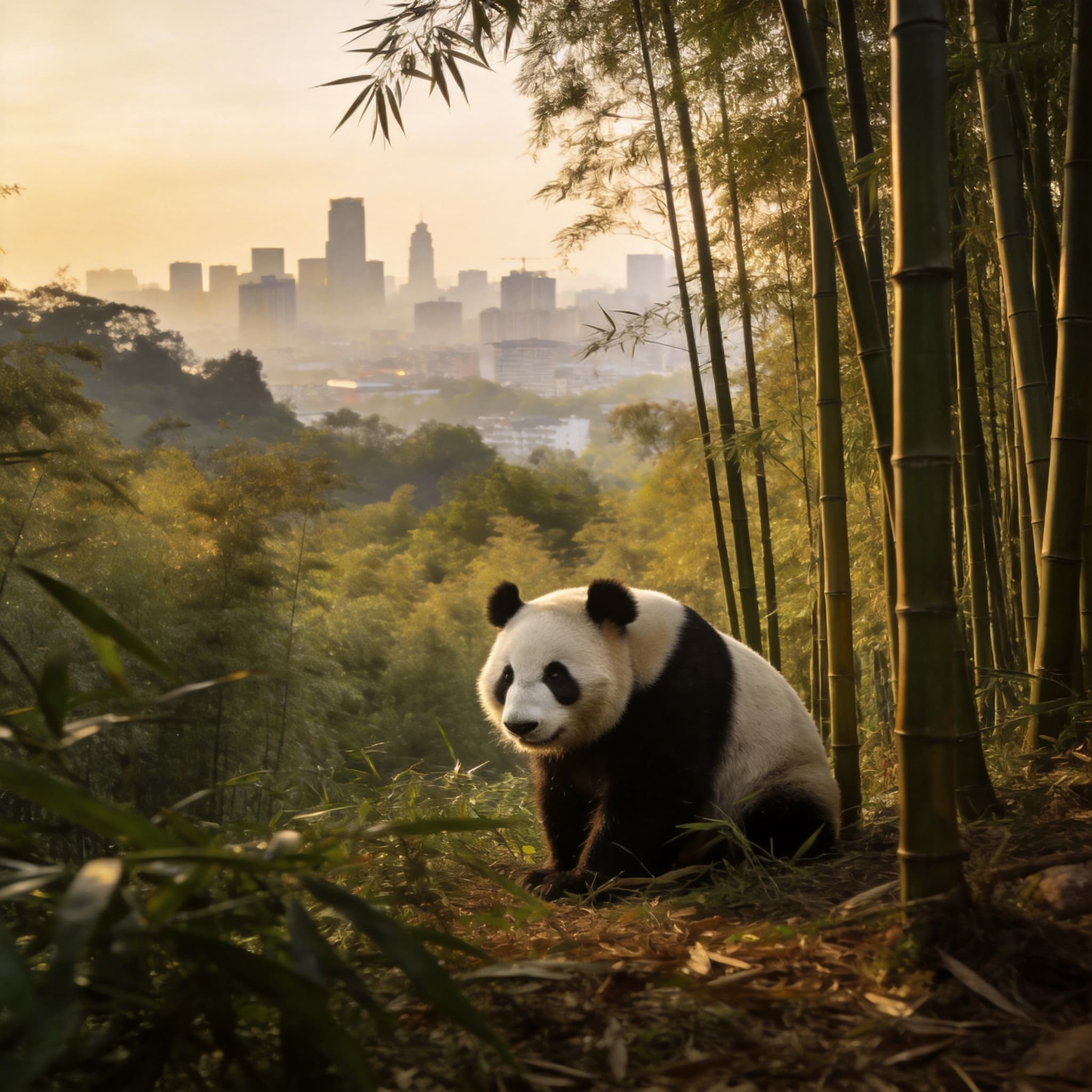
Go early. This is the most important Chengdu panda base travel tip. Arrive around 7:30 a.m. and head straight to the juvenile panda villas. Baby pandas are usually more active in the morning, eating bamboo, climbing, and rolling around.
After 9:00 a.m., many pandas begin to hide or sleep, especially on warm days. Also, you do not necessarily need the bundled shuttle cart ticket; walking is usually enough for most travelers.
Next stop: Wenshu Monastery
About 48 minutes by direct shuttle
2. Wenshu Monastery
Opening hours: 9:00–17:00
Admission: Free
Highlights:
Wenshu Monastery is a thousand-year-old temple in the middle of Chengdu. Compared with some more crowded attractions, it is easier to take photos here, especially around the red walls and bamboo shadows.
The monastery feels lively but not overwhelming. Before leaving, consider buying mung bean cakes from the palace-style pastry shop near the entrance.
Next stop: Wuhou Shrine
About 43 minutes by metro
3. Wuhou Shrine
Opening hours: 7:30–17:00
Admission: RMB 50
Why go:
Wuhou Shrine is the only temple in China that jointly commemorates both a ruler and his ministers. It is especially meaningful for travelers interested in Three Kingdoms history.
The red-wall bamboo pathway is one of Chengdu’s most popular photo spots. If you are building a Chengdu Wuhou Shrine and Jinli guide, these two places should be visited together because Jinli is directly next to the shrine.
Next stop: Jinli
About 1 minute on foot
4. Jinli
Opening hours: 9:00–22:00
Admission: Free
Highlights:
Jinli is atmospheric at night, especially when the lanterns light up. It is good for photos and souvenirs, but not the best place for serious food hunting.
Skip overpriced tourist snacks and trendy hotpot base souvenirs. If you want something small, try sweet rice cakes on skewers or look for Three Kingdoms-themed creative products such as Zhuge Liang bookmarks.
Next stop: Fuqin Night Market
About 30 minutes by metro
5. Fuqin Night Market
Opening hours: 17:00–23:00
Admission: Free
Highlights:
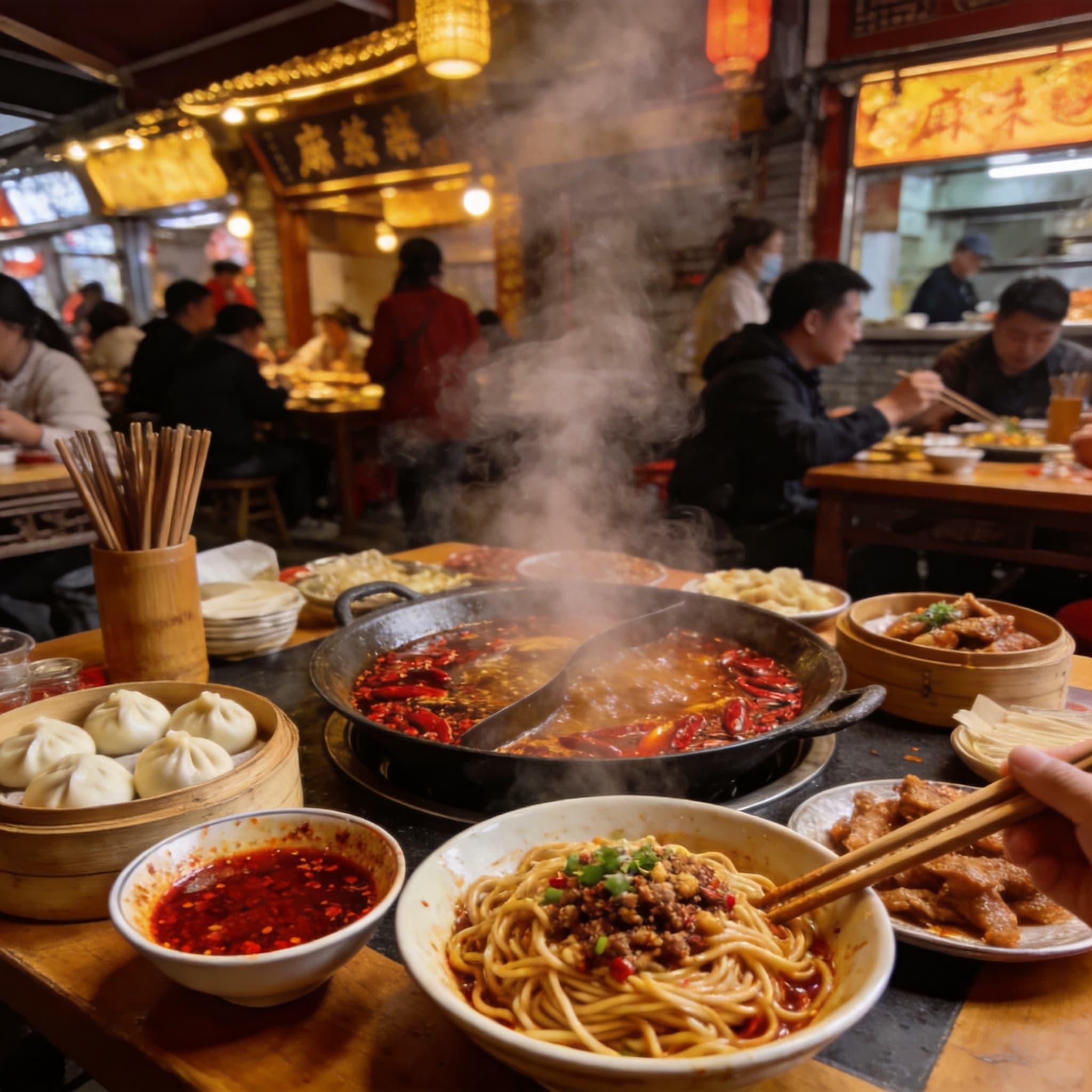
Fuqin Night Market is one of the best night markets in Chengdu if you want something more local and affordable. You can find egg pancakes, crispy potatoes, hand-shaken lemon tea, grilled snacks, and many other street foods.
Compared with more commercial night markets, Fuqin feels more like a real neighborhood food scene. It is a strong choice for travelers looking for an authentic Chengdu food guide for tourists.
Day 3: Industrial Photo Spots, Food Streets, Museums and Yulin Nightlife
Day 3 gives you a different side of Chengdu: creative districts, student-favorite food streets, museums, Taoist culture, and the relaxed nightlife of Yulin Road.
1. Eastern Suburb Memory
Opening hours: All day
Admission: Free
Highlights:
Eastern Suburb Memory is one of the best photo spots in Chengdu for industrial-style backgrounds. The locomotive plaza, old factory buildings, and graffiti walls are popular with photographers and young travelers.
If you are searching for Eastern Suburb Memory Chengdu photo spots, focus on the old factory zones, outdoor installations, and creative shops. In the evening, there are sometimes livehouse performances.
Next stop: Jianshe Road
About 17 minutes on foot
2. Jianshe Road
Opening hours: 11:00–22:00
Admission: Free
Highlights:
Jianshe Road is a student-loved food street with a wide range of snacks. Popular options include pork ribs, roasted pig trotters, bobo chicken, fried snacks, and drinks.
For travelers looking for a Chengdu food street guide or Chengdu hidden food streets, Jianshe Road is a better choice than eating only around tourist attractions.
Next stop: Chengdu Museum
About 40 minutes by metro
3. Chengdu Museum
Opening hours: 9:00–17:00
Admission: Free
Why go:
Chengdu Museum is one of the best places to understand the city’s history. Highlights include bronze swords from the pre-Qin and Han periods, Shu brocade from the Tang and Song dynasties, and the animal specimen exhibition on Basement Level 1.
For souvenirs, Sanxingdui-themed bookmarks are a safe and practical choice.
Next stop: Qingyang Palace
About 20 minutes by metro
4. Qingyang Palace
Opening hours: 8:00–18:00
Admission: RMB 10
Highlights:
Qingyang Palace is one of Chengdu’s oldest Taoist temples. The bronze goat in front of Sanqing Hall is the most famous symbol of the site, and visitors often touch it for good luck.
The teahouse in the back courtyard is peaceful and less touristy. A cup of tea costs around RMB 25, making it a nice place to slow down before heading into the evening.
Next stop: Yulin Road
About 30 minutes by metro
5. Yulin Road
Best time to visit: After 20:00
Admission: Free
Highlights:
Yulin Road is not only about the famous tavern. The neighborhood has small bars, local restaurants, graffiti walls, markets, and a relaxed community atmosphere.
If you are looking for a Yulin Road Chengdu nightlife guide, arrive around dusk, walk through the nearby lanes, take photos around Yulin 4th Lane, and then choose a small bar or restaurant for the evening.
Key Chengdu Travel Mistakes to Avoid
If it is your first time in Chengdu, these are the most common travel mistakes to avoid.
- Do not visit the panda base too late: Pandas are most active in the morning. In the afternoon, many are sleeping.
- Do not rely on Jinli for food: Jinli has beautiful night views, but for better food value, go to Kuixinglou, Fuqin, Yulin, or Jianshe Road.
- Do not choose hotpot only near scenic spots: Many restaurants near tourist areas are designed for visitors and may be overpriced. Look for busy neighborhood hotpot restaurants instead.
- Do not wait too long for internet-famous shops: If a Chunxi Road or Taikoo Li shop requires more than an hour of waiting, skip it. Chengdu has too much good food to waste time in one line.
- Do not assume you must buy a Wuhou Shrine ticket just for red-wall photos: Some red-wall photo spots can be photographed outside paid areas.
- Do not forget museum closing days: Chengdu Museum is usually closed on Mondays, so book and plan ahead.
This section is especially useful for anyone searching for Chengdu travel mistakes to avoid or what to avoid in Chengdu travel.
Best Night Markets in Chengdu
If food is a major reason for your trip, add at least one night market to your itinerary. Below are nine popular options for different travel styles.
1. Xipu Night Market
Location: Pidu District
Transport: Exit F, Xipu Station, Metro Lines 2/6; walk 944 meters
Xipu Night Market is one of Chengdu’s older and larger night markets. It is farther from the city center, but the scale is big and prices are usually lower than at more central night markets.
2. Wangping Street & Xiangxiang Alley Night Market
Location: Jinjiang District
Transport: Exit D, Dongmen Bridge Station, Metro Line 2; walk 813 meters
Recommendation level: Recommended
This area attracts a trendy crowd and offers everything from Chengdu hotpot to Thai food, Japanese cuisine, Spanish dishes, and Southeast Asian flavors. At night, you can enjoy cocktails or coffee near the river.
3. Kuixinglou Snack Street
Location: Qingyang District
Transport: Exit B/D, Kuanzhai Alley Station, Metro Line 4; walk 778 meters
Recommendation level: Recommended
Kuixinglou is a strong alternative to eating inside Kuanzhai Alley. It is more restaurant-based than stall-based, with popular local names such as Maojiao Huola and Chengdu Chike nearby.
4. Yulin Night Market
Location: Wuhou District
Transport: Exit E, Nijiaqiao Station, Metro Line 1; walk 854 meters
Recommendation level: Recommended
Yulin is one of Chengdu’s most atmospheric old neighborhoods. It combines food, bars, local markets, and community life, making it a good area for both dinner and nightlife.
5. Fuqin Night Market
Location: Jinniu District
Transport: Exit B1, Fuqin Station, Metro Line 5; walk 331 meters
Recommendation level: Recommended
Fuqin Night Market is close to downtown and located in an old neighborhood. Prices are friendly, the atmosphere is local, and the market is relatively orderly and clean.
6. Jianshe Road Snack Street
Location: Chenghua District
Transport: Exit C/D, Jianshe North Road Station, Metro Line 6; walk 506 meters
Recommendation level: Recommended
Jianshe Road is a famous Chengdu snack street near the University of Electronic Science and Technology of China. It has many food options and a strong student vibe, though prices have risen in recent years.
7. Liulangwan Night Market
Location: Wenjiang District
Transport: Exit C, Yangliuhe Station, Metro Line 4; walk 747 meters
Liulangwan Night Market is near the university area in Wenjiang. It is large, lively, diverse, and relatively affordable, with food stalls and a dedicated clothing street.
8. Changle Night Market
Location: Shuangliu District
Transport: Exit D, Jinhua Station, Metro Line 10; walk 2.1 km
Changle Night Market is located near the Shuangliu Aviation Port area. It is known for affordable food and is more suitable for travelers staying nearby.
9. Dayuan Night Market
Location: Wuhou District
Transport: Exit B1, Dayuan Station, Metro Line 5; walk 1.8 km
Dayuan Night Market is located in south Chengdu and works well as a late-night food stop for people staying in that part of the city. A typical meal costs around RMB 40–50 per person.
Chengdu Travel Tips for Tourists
Getting Around Chengdu by Metro
The metro is usually the best way to get around Chengdu. It avoids traffic, connects most major attractions, and is easier for first-time visitors than relying only on taxis.
If you are searching for how to get around Chengdu by metro, the simple answer is: choose accommodation near a metro station, use the metro for long-distance movement, and only use taxis for short final connections when necessary.
Choosing the Right Airport
If possible, choose Shuangliu Airport when flying to Chengdu. It is much closer to the city center than Tianfu Airport. Tianfu Airport can take more than one hour to reach downtown.
Visiting Dujiangyan
If you plan a side trip to Dujiangyan, buy intercity train tickets from Xipu to Lidui Park in advance. The ride takes about 30 minutes and is very convenient.
Best Area to Stay in Chengdu for Tourists
For first-time visitors, do not focus only on Chunxi Road. It is central, but it can be expensive and noisy.
A better option is to stay near a metro station on Line 2. This gives you convenient access to major attractions while often offering better value for money.
If you want nightlife, food, and a more local atmosphere, consider areas near Yulin, Nijiaqiao, or other well-connected neighborhoods. If you want shopping and city-center convenience, Chunxi Road and Taikoo Li are still practical but usually busier.
Chengdu Food Guide for First-Time Visitors
Food is one of the biggest reasons to visit Chengdu, but first-time visitors should avoid eating only in scenic areas.
- Hotpot: Skip internet-famous hotpot restaurants with long lines. Look for busy neighborhood hotpot places instead.
- Food streets: Kuixinglou Street, Yulin Road, Fuqin Night Market, and Jianshe Road are better choices than relying only on Jinli or Kuanzhai Alley.
- Local snacks: Try egg pancakes, crispy potatoes, bobo chicken, sweet rice cakes, skewers, and hand-shaken drinks.
- Fish mint warning: Many Chengdu snacks may contain fish mint, also known as houttuynia. If you cannot eat it, tell the vendor in advance.
This section supports travelers looking for an authentic Chengdu food guide for tourists and practical Chengdu local food and night market guide recommendations.
Best Photo Spots in Chengdu
If photography is part of your itinerary, these places are especially worth saving:
- IFS climbing panda: Best for iconic downtown Chengdu photos.
- Taikoo Li: Best for modern Chinese architecture and lifestyle shots.
- Daci Temple: Best for red walls and temple details near downtown.
- Wenshu Monastery: Best for quieter red-wall and bamboo photos.
- Wuhou Shrine: Best for classic red-wall bamboo scenery.
- Eastern Suburb Memory: Best for industrial-style photos.
- Yulin 4th Lane: Best for graffiti and neighborhood atmosphere.
For travelers searching for best photo spots in Chengdu red walls, Wuhou Shrine, Wenshu Monastery, Daci Temple, Du Fu Thatched Cottage, Yongling Museum, and Nanjiao Park are all good options.
Chengdu Travel Packing List
Clothing
- Comfortable sneakers: essential if you plan to visit Mount Qingcheng or walk all day
- Light jacket: mountain areas can be cool in the morning and evening
- Sun-protective clothing: useful in summer when UV can be strong
Essentials
- Sunscreen
- Sunglasses
- Umbrella: Chengdu often has sudden showers
- Power bank: shared chargers can be easy to borrow but inconvenient to return
- Stomach medicine: useful if you plan to eat a lot of spicy food
FAQ: First Time in Chengdu
How many days do you need in Chengdu?
For a first trip, 3 days is enough to see Chengdu’s major highlights, including pandas, downtown attractions, temples, food streets, teahouses, and night markets. If you want to add Dujiangyan or Mount Qingcheng, plan 4 to 5 days.
Is 3 days enough for Chengdu?
Yes. A well-planned Chengdu itinerary 3 days route can cover the Chengdu Research Base of Giant Panda Breeding, Chunxi Road, Taikoo Li, People’s Park, Wuhou Shrine, Jinli, Chengdu Museum, Qingyang Palace, Yulin Road, and several food streets.
What is the best itinerary for first-time visitors to Chengdu?
The best itinerary for first-time visitors is a no-detour route: spend Day 1 downtown, Day 2 on pandas and historic sites, and Day 3 on museums, food streets, and local neighborhoods.
When is the best time to visit Chengdu Panda Base?
The best time to visit Chengdu Panda Base is early in the morning, ideally around opening time at 7:30 a.m. Pandas are usually more active before 9:00 a.m.
Where should tourists stay in Chengdu?
Tourists should stay near a metro station, especially along Line 2. This makes it easier to reach downtown attractions, food streets, and transport hubs without relying too much on taxis.
What food streets are worth visiting in Chengdu?
Kuixinglou Street, Jianshe Road, Yulin Road, Fuqin Night Market, and Wangping Street are all worth visiting. They offer better food variety and value than many tourist-area snack streets.
What should tourists avoid in Chengdu?
Avoid arriving late at the panda base, eating only inside tourist attractions, choosing overpriced restaurants near scenic spots, and waiting too long for internet-famous shops. Also remember that some museums close on Mondays.
Final Summary
For a first-time trip, this Chengdu travel guide for first timers gives you a balanced route: see pandas, visit temples, explore old streets, photograph red walls, drink covered-bowl tea, and end your evenings at local food streets or night markets.
In short: spend your days with pandas, temples, museums, and teahouses; spend your nights in Fuqin, Yulin, Jianshe Road, or other local food neighborhoods. That is the easiest way to experience Chengdu’s culture, food, and everyday street life in just 3 days.
Advertisement
Planning a trip to Chengdu?
Check out our complete Chengdu destination guide with everything you need to know.
ChinaTravel Editorial Desk
Maintains practical destination and trip-planning information for English-speaking visitors. Time-sensitive details should be checked with official sources.