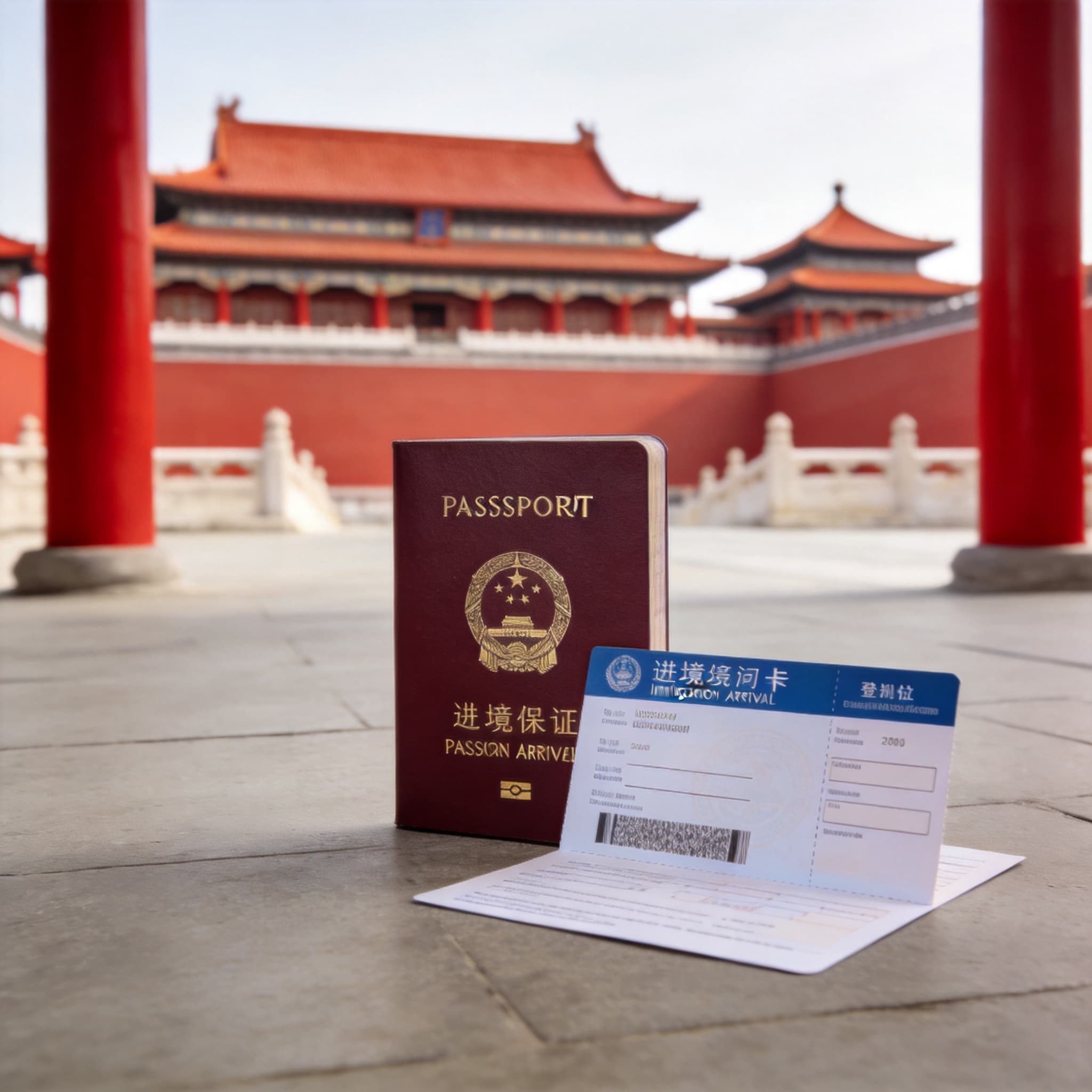
Can I Visit China Without a Visa? A Nationality-by-Nationality Checker
China has several visa-free entry programs, but the rule that applies to you depends on more than nationality alone. Your passport type, purpose of travel, length of stay, itinerary, entry port, and onward destination can all affect whether you need a visa.
This guide focuses on travelers holding ordinary passports and explains the main visa-free options available in 2026.
Important: A visa exemption does not guarantee admission. Chinese border inspection authorities make the final decision at the port of entry.
Quick Visa-Free Checker
Start with these questions:
-
Is your nationality covered by China’s unilateral visa-free policy?
You may generally visit mainland China for up to 30 days without a visa for approved short-term purposes. -
Does your country have a mutual visa-exemption agreement with China for ordinary passports?
You may be able to enter without a visa under the terms of that agreement. -
Are you traveling through China to a third country or region?
You may qualify for the 24-hour or 240-hour visa-free transit policy. -
Are you visiting only Hainan or joining an approved regional tour?
A regional visa-free policy may apply even if you do not qualify for nationwide visa-free entry. -
Do none of these policies apply?
You will normally need to obtain an appropriate Chinese visa before departure.
Part 1: China’s 30-Day Unilateral Visa-Free Policy
In 2026, ordinary-passport holders from the following 50 countries may generally enter China without a visa for stays of up to 30 days.
The policy covers short-term visits for:
- Tourism;
- Business;
- Visiting relatives or friends;
- Exchange visits; and
- Transit.
Europe
- Andorra
- Austria
- Belgium
- Bulgaria
- Croatia
- Cyprus
- Denmark
- Estonia
- Finland
- France
- Germany
- Greece
- Hungary
- Iceland
- Ireland
- Italy
- Latvia
- Liechtenstein
- Luxembourg
- Malta
- Monaco
- Montenegro
- Netherlands
- North Macedonia
- Norway
- Poland
- Portugal
- Romania
- Russia
- Slovakia
- Slovenia
- Spain
- Sweden
- Switzerland
- United Kingdom
Asia
- Bahrain
- Brunei
- Japan
- Kuwait
- Oman
- South Korea
- Saudi Arabia
Oceania
- Australia
- New Zealand
Americas
- Argentina
- Brazil
- Canada
- Chile
- Peru
- Uruguay
How Long Can You Stay?
Eligible travelers may remain in China for no more than 30 days per entry.
The permitted stay is calculated from 00:00 on the day following the date of entry.
For example, if you enter China on June 1, the 30-day period begins at 00:00 on June 2.
How Long Will the Policy Remain Valid?
The current validity periods are not identical for every country:
- Brunei: No specific expiration date has been announced for the ordinary-passport visa-free policy.
- Russia: The current unilateral visa-free arrangement is valid through December 31, 2027.
- The other 48 countries: The current policy is scheduled to remain valid through December 31, 2026.
Because temporary policies can be extended, revised, or replaced, travelers should check the latest official rules before booking.
Do You Need to Travel to a Third Country?
No. The third-country requirement does not apply to the 30-day unilateral visa-free policy.
The following routes may all be acceptable:
- France → China → France
- Canada → China → Canada
- Australia → China → Japan
- United Kingdom → China → Hong Kong
- South Korea → China → Thailand
You may enter China directly from your country of residence and return to the same country after your visit.
Which Chinese Cities Can You Visit?
The unilateral 30-day visa-free policy is not limited to a short list of transit cities.
Eligible travelers may generally visit destinations throughout mainland China that are open to foreign visitors, including:
- Beijing
- Shanghai
- Guangzhou
- Shenzhen
- Chengdu
- Chongqing
- Xi’an
- Hangzhou
- Suzhou
- Nanjing
- Guilin
- Yangshuo
- Kunming
- Dali
- Lijiang
- Xiamen
- Qingdao
- Harbin
- Sanya
- Zhangjiajie
- Kashgar
Certain border areas, military zones, nature reserves, and other restricted destinations may require additional permits or may not be open to foreign travelers.
Tibet is a notable example: foreign visitors generally need a Tibet Travel Permit and must follow the applicable travel arrangements, even if they enter China without a visa.
Part 2: Countries with Mutual Visa Exemption for Ordinary Passports
China also has bilateral or mutual visa-exemption agreements with a number of countries.
Under these agreements, ordinary-passport holders may be able to make short visits to China without applying for a visa in advance.
Countries with ordinary-passport arrangements include:
- Albania
- Antigua and Barbuda
- Armenia
- Azerbaijan
- Bahamas
- Barbados
- Belarus
- Bosnia and Herzegovina
- Dominica
- Ecuador
- Fiji
- Georgia
- Grenada
- Kazakhstan
- Malaysia
- Maldives
- Mauritius
- Qatar
- Samoa
- San Marino
- Serbia
- Seychelles
- Singapore
- Solomon Islands
- Suriname
- Thailand
- Tonga
- United Arab Emirates
- Uzbekistan
Some countries may also appear under other Chinese visa-free programs. When more than one policy applies, the rule established by the relevant bilateral agreement may take priority.
Stay Limits Are Not the Same for Every Country
Mutual visa-exemption agreements do not all provide the same length of stay.
Depending on nationality, the agreement may allow:
- Up to 30 days per visit;
- Up to 60 days;
- Up to 90 days;
- A maximum number of days within a 180-day period; or
- Another country-specific stay limit.
Travelers should therefore check the exact agreement for their nationality rather than assuming that every mutual visa exemption permits 30 days.
Typical Permitted Purposes
Mutual visa-free entry usually covers short visits such as:
- Tourism;
- Business;
- Family or private visits;
- Cultural exchanges; and
- Transit.
Visa-free entry normally does not authorize:
- Employment;
- Long-term study;
- Permanent residence;
- Long-term family reunion;
- Journalism or professional news reporting; or
- Other activities requiring prior government approval.
Part 3: Nationality-by-Nationality Checker
Use the following alphabetical checker as a quick starting point.
A
- Albania: Visa-free under a mutual ordinary-passport agreement.
- Andorra: Visa-free for up to 30 days under the unilateral policy.
- Antigua and Barbuda: Visa-free under a mutual ordinary-passport agreement.
- Argentina: Visa-free for up to 30 days under the unilateral policy.
- Armenia: Visa-free under a mutual ordinary-passport agreement.
- Australia: Visa-free for up to 30 days under the unilateral policy.
- Austria: Visa-free for up to 30 days under the unilateral policy.
- Azerbaijan: Visa-free under a mutual ordinary-passport agreement.
B
- Bahamas: Visa-free under a mutual ordinary-passport agreement.
- Bahrain: Visa-free for up to 30 days under the unilateral policy.
- Barbados: Visa-free under a mutual ordinary-passport agreement.
- Belarus: Visa-free under a mutual ordinary-passport agreement.
- Belgium: Visa-free for up to 30 days under the unilateral policy.
- Bosnia and Herzegovina: Visa-free under a mutual ordinary-passport agreement.
- Brazil: Visa-free for up to 30 days under the unilateral policy.
- Brunei: Visa-free for up to 30 days with no currently announced expiration date for the policy.
- Bulgaria: Visa-free for up to 30 days under the unilateral policy.
C
- Canada: Visa-free for up to 30 days under the unilateral policy through December 31, 2026.
- Chile: Visa-free for up to 30 days under the unilateral policy.
- Croatia: Visa-free for up to 30 days under the unilateral policy.
- Cyprus: Visa-free for up to 30 days under the unilateral policy.
D
- Denmark: Visa-free for up to 30 days under the unilateral policy.
- Dominica: Visa-free under a mutual ordinary-passport agreement.
E
- Ecuador: Visa-free entry may be available to Ecuadorian ordinary-passport holders under China’s applicable agreement; confirm the current implementation before travel.
- Estonia: Visa-free for up to 30 days under the unilateral policy.
F
- Fiji: Visa-free under a mutual ordinary-passport agreement.
- Finland: Visa-free for up to 30 days under the unilateral policy.
- France: Visa-free for up to 30 days under the unilateral policy.
G
- Georgia: Visa-free under a mutual ordinary-passport agreement.
- Germany: Visa-free for up to 30 days under the unilateral policy.
- Greece: Visa-free for up to 30 days under the unilateral policy.
- Grenada: Visa-free under a mutual ordinary-passport agreement.
H
- Hungary: Visa-free for up to 30 days under the unilateral policy.
I
- Iceland: Visa-free for up to 30 days under the unilateral policy.
- Ireland: Visa-free for up to 30 days under the unilateral policy.
- Italy: Visa-free for up to 30 days under the unilateral policy.
J
- Japan: Visa-free for up to 30 days under the unilateral policy.
K
- Kazakhstan: Visa-free under a mutual ordinary-passport agreement.
- Kuwait: Visa-free for up to 30 days under the unilateral policy.
L
- Latvia: Visa-free for up to 30 days under the unilateral policy.
- Liechtenstein: Visa-free for up to 30 days under the unilateral policy.
- Luxembourg: Visa-free for up to 30 days under the unilateral policy.
M
- Malaysia: Visa-free under a mutual ordinary-passport agreement.
- Maldives: Visa-free under a mutual ordinary-passport agreement.
- Malta: Visa-free for up to 30 days under the unilateral policy.
- Mauritius: Visa-free under a mutual ordinary-passport agreement.
- Monaco: Visa-free for up to 30 days under the unilateral policy.
- Montenegro: Visa-free for up to 30 days under the unilateral policy.
N
- Netherlands: Visa-free for up to 30 days under the unilateral policy.
- New Zealand: Visa-free for up to 30 days under the unilateral policy.
- North Macedonia: Visa-free for up to 30 days under the unilateral policy.
- Norway: Visa-free for up to 30 days under the unilateral policy.
O
- Oman: Visa-free for up to 30 days under the unilateral policy.
P
- Peru: Visa-free for up to 30 days under the unilateral policy.
- Poland: Visa-free for up to 30 days under the unilateral policy.
- Portugal: Visa-free for up to 30 days under the unilateral policy.
Q
- Qatar: Visa-free under a mutual ordinary-passport agreement.
R
- Romania: Visa-free for up to 30 days under the unilateral policy.
- Russia: Visa-free for up to 30 days under the unilateral policy through December 31, 2027.
S
- Samoa: Visa-free under a mutual ordinary-passport agreement.
- San Marino: Visa-free under a mutual passport agreement.
- Saudi Arabia: Visa-free for up to 30 days under the unilateral policy.
- Serbia: Visa-free under a mutual ordinary-passport agreement.
- Seychelles: Visa-free under a mutual ordinary-passport agreement.
- Singapore: Visa-free under a mutual ordinary-passport agreement.
- Slovakia: Visa-free for up to 30 days under the unilateral policy.
- Slovenia: Visa-free for up to 30 days under the unilateral policy.
- Solomon Islands: Visa-free under a mutual ordinary-passport agreement.
- South Korea: Visa-free for up to 30 days under the unilateral policy.
- Spain: Visa-free for up to 30 days under the unilateral policy.
- Suriname: Visa-free under a mutual ordinary-passport agreement.
- Sweden: Visa-free for up to 30 days under the unilateral policy.
- Switzerland: Visa-free for up to 30 days under the unilateral policy.
T
- Thailand: Visa-free under a mutual ordinary-passport agreement.
- Tonga: Visa-free under a mutual ordinary-passport agreement.
U
- United Arab Emirates: Visa-free under a mutual ordinary-passport agreement.
- United Kingdom: Visa-free for up to 30 days under the unilateral policy through December 31, 2026.
- Uruguay: Visa-free for up to 30 days under the unilateral policy.
- Uzbekistan: Visa-free under a mutual ordinary-passport agreement.
Part 4: What If Your Nationality Is Not Listed?
If your country is not included in the general visa-free lists above, you may still be able to visit China without obtaining a traditional tourist visa.
The main alternatives are:
- 24-hour visa-free transit;
- 240-hour visa-free transit;
- Hainan’s 30-day regional visa-free policy;
- Visa-free cruise-group entry;
- ASEAN tourist-group policies for Guilin or Xishuangbanna; or
- Organized tour-group entry from Hong Kong or Macao into approved areas.
Part 5: The 240-Hour Visa-Free Transit Option
The 240-hour visa-free transit policy allows eligible travelers to enter designated areas of China for up to 10 days while traveling to a third country or region.
Eligible Nationalities
Europe
- Albania
- Austria
- Belarus
- Belgium
- Bosnia and Herzegovina
- Bulgaria
- Croatia
- Cyprus
- Czech Republic
- Denmark
- Estonia
- Finland
- France
- Germany
- Greece
- Hungary
- Iceland
- Ireland
- Italy
- Latvia
- Lithuania
- Luxembourg
- Malta
- Monaco
- Montenegro
- Netherlands
- North Macedonia
- Norway
- Poland
- Portugal
- Romania
- Russia
- Serbia
- Slovakia
- Slovenia
- Spain
- Sweden
- Switzerland
- Ukraine
- United Kingdom
Americas
- Argentina
- Brazil
- Canada
- Chile
- Mexico
- United States
Oceania
- Australia
- New Zealand
Asia
- Brunei
- Indonesia
- Japan
- Qatar
- Singapore
- South Korea
- United Arab Emirates
Main Requirements
To use the 240-hour policy, you must:
- Hold a passport from one of the eligible countries;
- Have a valid international travel document;
- Enter through one of the designated ports;
- Hold a confirmed onward ticket;
- Depart for a third country or region within the permitted period; and
- Remain within the approved travel area.
A qualifying itinerary follows this pattern:
Country or Region A → Mainland China → Country or Region B
The destination after mainland China must be different from the place from which you arrived.
Qualifying Examples
- United States → China → Japan
- Mexico → China → South Korea
- Indonesia → China → Hong Kong
- Ukraine → China → Thailand
- Lithuania → China → Macao
Non-Qualifying Examples
- United States → China → United States
- Mexico → China → Mexico
- Ukraine → China → Ukraine
Hong Kong, Macao, and Taiwan are treated as separate regions from mainland China for transit purposes.
Part 6: The 24-Hour Visa-Free Transit Option
China’s 24-hour visa-free transit policy is generally available at open exit-entry ports to foreign nationals transiting to a third country or region.
You must normally:
- Hold a valid international travel document;
- Have a confirmed onward international ticket;
- Depart within 24 hours; and
- Remain in the restricted transit area of the port.
If you need to leave the airport or restricted port area, you must apply for a temporary entry permit. Approval is not automatic.
This option is most useful for travelers who:
- Have a short international connection;
- Are not eligible for the 240-hour policy;
- Do not plan to visit China beyond the connection; or
- Can remain in the airport’s international transit area.
Part 7: Hainan’s 30-Day Visa-Free Policy
Ordinary-passport holders from the following 59 countries may visit Hainan Province without a visa for up to 30 days under the regional policy:
- Albania
- Argentina
- Australia
- Austria
- Belarus
- Belgium
- Bosnia and Herzegovina
- Brazil
- Brunei
- Bulgaria
- Canada
- Chile
- Croatia
- Cyprus
- Czech Republic
- Denmark
- Estonia
- Finland
- France
- Germany
- Greece
- Hungary
- Iceland
- Indonesia
- Ireland
- Italy
- Japan
- Kazakhstan
- Latvia
- Lithuania
- Luxembourg
- Malaysia
- Malta
- Mexico
- Monaco
- Montenegro
- Netherlands
- New Zealand
- North Macedonia
- Norway
- Philippines
- Poland
- Portugal
- Qatar
- Romania
- Russia
- Serbia
- Singapore
- Slovakia
- Slovenia
- South Korea
- Spain
- Sweden
- Switzerland
- Thailand
- Ukraine
- United Arab Emirates
- United Kingdom
- United States
Permitted short-term purposes include:
- Tourism;
- Business;
- Visiting relatives or friends;
- Medical treatment;
- Conferences and exhibitions; and
- Sports competitions.
The policy generally requires travelers to enter through an open port in Hainan and remain within Hainan Province.
It does not authorize employment or long-term study.
Part 8: Special Regional and Group Policies
Visa-Free Cruise Groups
Foreign tourist groups of at least two people may enter through designated Chinese cruise ports without a visa when:
- The group is organized and received by a travel agency registered in China;
- Travelers arrive and depart on the same cruise ship as scheduled;
- The group follows the approved itinerary; and
- The stay does not exceed 15 days.
Eligible cruise ports include destinations such as:
- Shanghai
- Tianjin
- Dalian
- Qingdao
- Xiamen
- Guangzhou
- Shenzhen
- Haikou
- Sanya
ASEAN Tourist Groups Visiting Guilin
Ordinary-passport holders from ASEAN countries may visit Guilin without a visa for up to six days when traveling in an approved group organized and received by a qualified Chinese travel agency.
The ASEAN countries are:
- Brunei
- Cambodia
- Indonesia
- Laos
- Malaysia
- Myanmar
- Philippines
- Singapore
- Thailand
- Vietnam
Travelers must enter and leave through the designated Guilin port and remain within the approved area.
ASEAN Tourist Groups Visiting Xishuangbanna
Approved tourist groups from ASEAN member states may visit Xishuangbanna in Yunnan Province without a visa for up to six days.
The trip must:
- Be organized and received by a travel agency registered in China;
- Include at least two travelers;
- Use an approved entry and exit port; and
- Remain within Xishuangbanna Dai Autonomous Prefecture.
Approved Tours from Hong Kong or Macao to Guangdong
Foreign travelers from countries with diplomatic relations with China may be able to visit approved cities in Guangdong for up to six days when:
- They first enter Hong Kong or Macao;
- They join a group organized by a registered travel agency in Hong Kong or Macao;
- They enter and leave mainland China as part of that group; and
- They remain within the approved cities.
The permitted destinations include:
- Guangzhou
- Shenzhen
- Zhuhai
- Foshan
- Dongguan
- Zhongshan
- Huizhou
- Jiangmen
- Zhaoqing
- Shantou
Part 9: What Can You Do During a Visa-Free Visit?
Visa-free travelers may generally participate in approved short-term activities such as:
- Sightseeing;
- Independent travel;
- Visiting friends or relatives;
- Attending business meetings;
- Visiting trade fairs;
- Participating in cultural exchanges;
- Attending conferences;
- Joining short study tours; and
- Transiting to another destination.
You normally need an appropriate visa or permit if you intend to:
- Work in China;
- Take up paid employment;
- Study long term;
- Live in China permanently;
- Conduct professional news reporting;
- Perform regulated professional activities; or
- Stay beyond the permitted visa-free period.
Visa-free entry is based on the purpose declared at immigration. Travelers must not use a tourism or business exemption to engage in unauthorized employment or other inconsistent activities.
Part 10: Documents to Carry
Even if you do not need a visa, you should carry evidence supporting your trip.
Recommended documents include:
- A valid ordinary passport;
- A return or onward ticket;
- Hotel reservations;
- A basic travel itinerary;
- Contact details for your hotel or host;
- An invitation letter for a business or family visit;
- Proof of sufficient travel funds;
- Travel insurance information;
- Tickets for domestic travel; and
- Any visa or entry authorization required by your next destination.
Your passport must remain valid for your intended stay. Airlines and immigration authorities may also apply additional document-validity requirements.
Part 11: Frequently Asked Questions
Can I Enter China More Than Once Without a Visa?
Travelers covered by the unilateral visa-free policy may generally use it for multiple entries.
There is currently no publicly stated limit on the number of entries or total cumulative days under that policy. However, each visit must have a genuine permitted purpose.
Frequent or back-to-back entries may lead immigration officers to ask additional questions about your activities in China.
Mutual visa-exemption agreements may impose separate cumulative limits, such as a maximum number of days within a 180-day period.
Do I Need to Join a Tour Group?
Not under the nationwide unilateral visa-free policy or most ordinary-passport mutual visa exemptions. Eligible travelers may normally visit China independently.
A tour group is required only under specific regional programs, such as certain Guilin, Xishuangbanna, cruise, Guangdong, or Hainan group-entry policies.
Do I Need to Apply Before Traveling?
Eligible travelers using the 30-day unilateral policy generally do not need to apply to a Chinese embassy or consulate in advance.
However, you should verify your eligibility and carry supporting documents.
Can I Enter by Train, Ship, or Land?
The unilateral visa-free policy generally applies at Chinese air, land, and sea ports open to foreign nationals, unless another law or bilateral arrangement provides otherwise.
Transit and regional policies may be limited to specifically designated ports.
Can I Work Remotely While Visiting China?
Visa-free entry does not provide work authorization. Remote-work situations can involve immigration, employment, tax, cybersecurity, and business-compliance questions.
If work is a substantial purpose of your visit, seek advice from the appropriate Chinese diplomatic mission or immigration authority before traveling.
Can I Extend a Visa-Free Stay?
A visa-free stay should not be treated as automatically extendable.
If an emergency, force majeure event, or another qualifying circumstance prevents departure, contact the local exit-entry administration authority before your permitted stay expires.
Does Visa-Free Entry Include Hong Kong and Macao?
Hong Kong and Macao maintain separate immigration systems from mainland China.
Eligibility for mainland China does not automatically determine whether you may enter Hong Kong or Macao, and vice versa. Check the separate entry rules for each destination.
Final Decision Guide
You Can Probably Visit Mainland China Without a Visa If:
- Your nationality is covered by the 30-day unilateral policy;
- Your ordinary passport is covered by a mutual visa-exemption agreement;
- Your itinerary qualifies for the 240-hour visa-free transit policy;
- You are making an eligible transit of no more than 24 hours; or
- You meet the conditions of a regional or organized-tour exemption.
You Probably Need a Visa If:
- Your nationality is not covered by an applicable exemption;
- Your intended stay exceeds the visa-free limit;
- You plan to work, study long term, reside, or conduct professional reporting;
- You do not meet the third-country requirement for visa-free transit;
- Your entry port is not eligible for the policy you intend to use;
- You plan to travel outside a permitted regional area; or
- Your passport type is not covered by the relevant policy.
Final Checklist Before Departure
Confirm all of the following:
- Your nationality
- Your passport type
- Your passport validity
- The purpose of your visit
- The maximum permitted stay
- The policy’s expiration date
- Your entry and exit ports
- Your onward or return ticket
- Your permitted travel area
- Any cumulative stay limits
- Entry requirements for your next destination
China’s visa-free rules can change, especially temporary unilateral policies. Always verify the latest requirements with China’s National Immigration Administration, the Ministry of Foreign Affairs, the Chinese embassy or consulate responsible for your location, and your airline before departure.
Advertisement
ChinaTravel Editorial Desk
Maintains practical destination and trip-planning information for English-speaking visitors. Time-sensitive details should be checked with official sources.
Compare Current Trip Options
Check live availability and the provider's current terms before booking.
Compare China Trip OptionsSponsored link — we may earn a commission at no extra cost to you.