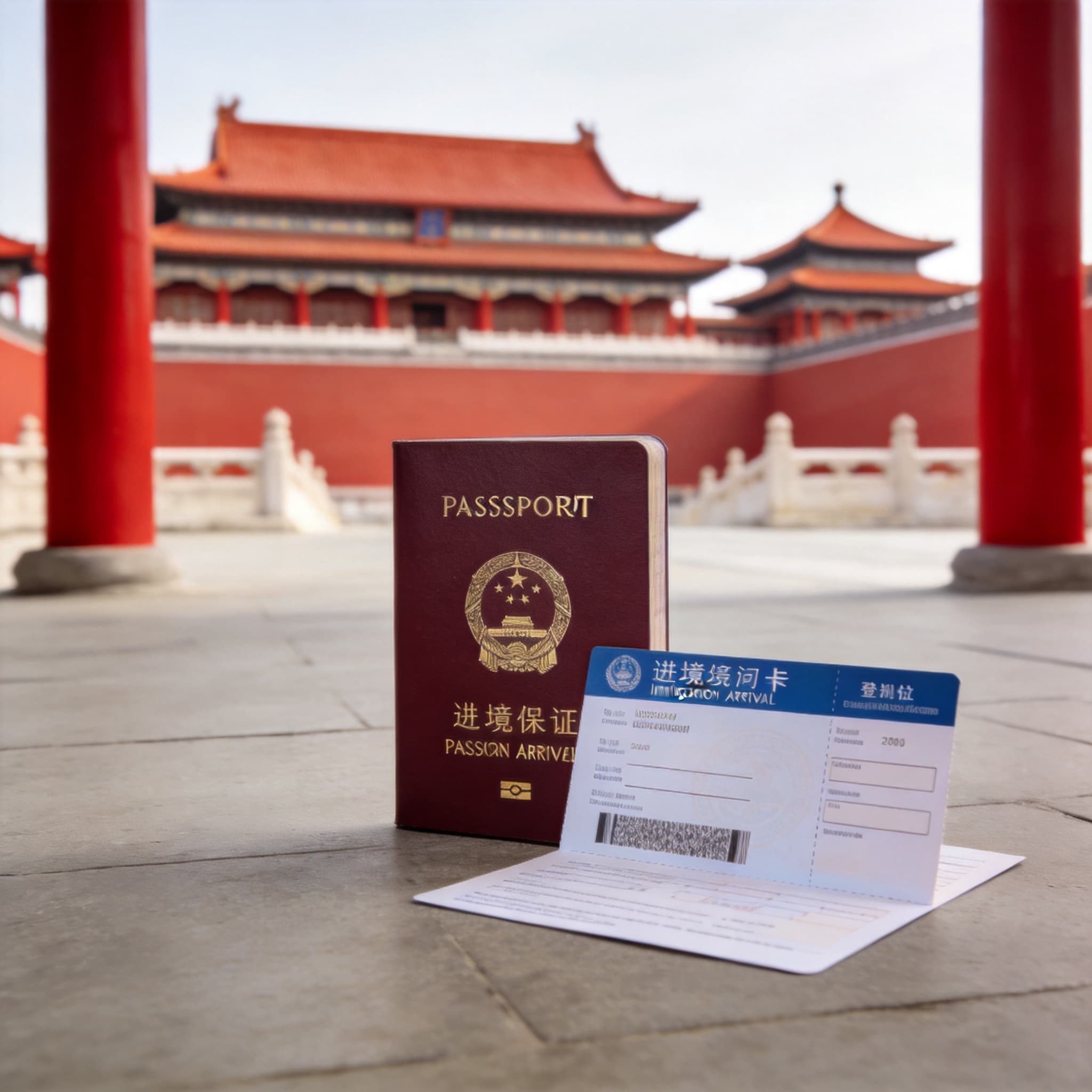
China offers two main visa-free transit options for international travelers: the 24-hour visa-free transit policy and the 240-hour visa-free transit policy. Although both allow eligible passengers to transit through China without obtaining a visa in advance, they differ significantly in eligibility, permitted travel areas, and entry requirements.
The correct policy depends on your nationality, itinerary, port of entry, onward ticket, and whether you plan to leave the airport.
Quick Comparison
| Rule | Maximum Transit Period | Eligible Nationalities | Can You Leave the Airport? | Geographic Restrictions |
|---|---|---|---|---|
| 24-Hour Visa-Free Transit | Up to 24 hours | Generally available to most foreign nationals, subject to inspection | Sometimes, with a temporary entry permit | Usually limited to the approved transit area or port city |
| 240-Hour Visa-Free Transit | Up to 240 hours, or 10 days | Citizens of 55 eligible countries | Yes | Travel is allowed only within designated areas |
| China’s Unilateral Visa-Free Entry | Up to 30 days | Citizens of countries covered by the separate visa-free policy | Yes | Generally not limited to transit-policy areas |
The 24-hour and 240-hour policies are both transit policies. They normally require travelers to continue from China to a third country or region.
What Is the 24-Hour Visa-Free Transit Policy?
The 24-hour visa-free transit policy is designed for passengers making a short connection in China before continuing to another country or region.
It is generally available to foreign travelers who:
- Hold a valid passport or other recognized international travel document;
- Have a confirmed onward ticket;
- Depart China within 24 hours;
- Travel to a third country or region;
- Meet the entry requirements of their final destination; and
- Do not have a record or circumstance that may prevent entry into China.
The 24-hour policy is broader in terms of nationality than the 240-hour policy, but it offers much less time and fewer opportunities to travel inside China.
Staying Inside the Airport
If your connecting flight departs from the same airport and your baggage is checked through to the final destination, you may be able to remain in the international transit area.
At certain airports, eligible passengers making a direct international connection within 24 hours may complete the transfer without going through standard immigration inspection.
However, this depends on:
- The airport;
- Whether the flights are connected;
- Whether baggage must be collected;
- Whether you need to change terminals;
- Whether the terminal transfer requires entering China; and
- Instructions from the airline and immigration authorities.
Leaving the Airport During a 24-Hour Transit
The 24-hour transit rule does not automatically give every passenger permission to enter the city.
If you want or need to leave the restricted transit area, you may have to apply for a temporary entry permit at the immigration inspection counter. Approval is made by the border authorities after reviewing your itinerary and circumstances.
Permission may be refused if:
- Your layover is too short;
- Your accommodation or onward travel cannot be verified;
- Your passport has insufficient remaining validity;
- Your route does not qualify as international transit;
- You have an immigration violation or inadmissibility record; or
- The authorities determine that temporary entry is unnecessary or inappropriate.
Therefore, travelers should not book a non-refundable hotel or city tour on the assumption that permission to leave the airport is guaranteed.
What Is the 240-Hour Visa-Free Transit Policy?
The 240-hour visa-free transit policy allows eligible travelers to enter China for up to 240 hours, or 10 days, without applying for a Chinese visa in advance.
Unlike the 24-hour policy, this option is intended for travelers who want enough time to explore one or more approved destinations while traveling through China.
Eligible visitors may generally engage in activities such as:
- Tourism;
- Business meetings;
- Trade-related visits;
- Visiting relatives or friends;
- Cultural or professional exchanges; and
- Other permitted short-term activities.
The policy does not authorize activities that normally require prior approval or a specific visa, including:
- Employment;
- Long-term study;
- Journalism or news reporting;
- Permanent residence; or
- Other regulated activities.
Who Can Use the 240-Hour Policy?
The 240-hour visa-free transit policy currently covers citizens of 55 countries.
Europe
- Albania
- Austria
- Belarus
- Belgium
- Bosnia and Herzegovina
- Bulgaria
- Croatia
- Cyprus
- Czech Republic
- Denmark
- Estonia
- Finland
- France
- Germany
- Greece
- Hungary
- Iceland
- Ireland
- Italy
- Latvia
- Lithuania
- Luxembourg
- Malta
- Monaco
- Montenegro
- Netherlands
- North Macedonia
- Norway
- Poland
- Portugal
- Romania
- Russia
- Serbia
- Slovakia
- Slovenia
- Spain
- Sweden
- Switzerland
- Ukraine
- United Kingdom
Americas
- Argentina
- Brazil
- Canada
- Chile
- Mexico
- United States
Oceania
- Australia
- New Zealand
Asia
- Brunei
- Indonesia
- Japan
- Qatar
- Singapore
- South Korea
- United Arab Emirates
Nationality alone is not enough. Travelers must also satisfy the itinerary, document, port, and onward-travel requirements.
The Third-Country Rule
The most important requirement under both transit policies is that your journey must involve a third country or region.
A qualifying route normally follows this pattern:
Country or Region A → Mainland China → Country or Region B
Country or Region B must be different from Country or Region A.
Routes That Normally Qualify
- United States → China → Japan
- United Kingdom → China → South Korea
- France → China → Singapore
- Australia → China → Hong Kong
- Hong Kong → China → Thailand
- Japan → China → Macao
- Germany → China → Taiwan
For transit-policy purposes, Hong Kong, Macao, and Taiwan are treated as separate regions from mainland China.
Routes That Normally Do Not Qualify
- United States → China → United States
- Japan → China → Japan
- United Kingdom → China → United Kingdom
A return journey to the same country or region is generally not considered transit to a third destination, even if the flights are booked separately.
For example:
Los Angeles → Shanghai → Los Angeles
would not normally qualify for visa-free transit.
However:
Los Angeles → Shanghai → Tokyo → Los Angeles
may qualify because the immediate journey after China is to Japan.
How Is the 240-Hour Period Calculated?
Under the 240-hour policy, the permitted stay is generally calculated from 00:00 on the day following the date of entry.
For example, if you arrive at an eligible Chinese port at 3:00 p.m. on June 1, the formal 240-hour period generally begins at 00:00 on June 2.
Your exact departure deadline will be determined and recorded by immigration authorities when you enter China. Always follow the date shown on your temporary entry documentation rather than calculating the deadline only by yourself.
The 24-hour transit period is much stricter and is connected directly to the short transit window shown by your travel itinerary.
Where Can You Enter Under the 240-Hour Policy?
Eligible passengers must enter through an approved port. The policy currently applies through 65 designated ports across 24 provincial-level regions.
Approved entry points include major airports and selected railway, land, and seaport checkpoints serving destinations such as:
- Beijing
- Shanghai
- Tianjin
- Chongqing
- Guangzhou
- Shenzhen
- Zhuhai
- Chengdu
- Xi’an
- Hangzhou
- Nanjing
- Qingdao
- Xiamen
- Wuhan
- Changsha
- Kunming
- Lijiang
- Guilin
- Haikou
- Sanya
- Harbin
- Dalian
- Shenyang
- Zhengzhou
- Jinan
- Fuzhou
- Nanchang
- Guiyang
- Taiyuan
- Urumqi
- Kashgar
- Dunhuang
- Xining
- Yinchuan
Not every international airport, railway station, land crossing, or seaport in China participates in the policy. Your planned entry point must be on the official list of eligible ports.
Where Can You Travel During the 240 Hours?
The 240-hour policy does not provide unrestricted access to all of mainland China. Travelers must remain within the officially permitted areas.
The policy covers designated areas in the following 24 provincial-level regions:
- Beijing
- Tianjin
- Hebei
- Liaoning
- Heilongjiang
- Shanghai
- Jiangsu
- Zhejiang
- Fujian
- Shandong
- Henan
- Hubei
- Hunan
- Guangdong
- Guangxi
- Chongqing
- Sichuan
- Yunnan
- Shaanxi
- Shanxi
- Anhui
- Jiangxi
- Hainan
- Guizhou
Cross-province travel is allowed where the destinations are included in the approved area. For example, an eligible traveler may be able to enter through Shanghai and visit approved destinations in Jiangsu and Zhejiang before departing from an eligible port.
However, some participating provinces are fully open under the policy, while others include only specified cities or administrative areas. Travelers should verify every destination on their itinerary before departure.
You must not travel outside the authorized area simply because your total stay remains under 240 hours.
Can You Enter and Leave Through Different Ports?
Under the 240-hour policy, eligible travelers may generally enter through one approved port and depart through another approved port, provided that:
- Both ports participate in the policy;
- The complete journey remains within the authorized area;
- The onward departure is to a third country or region;
- The confirmed ticket meets the required deadline; and
- Immigration authorities approve the itinerary.
For example, a traveler may be able to arrive in Shanghai, visit cities in the approved Yangtze River Delta area, and depart internationally from an eligible airport in Jiangsu or Zhejiang.
The departure port must still be compatible with the policy and the traveler’s authorized area of stay.
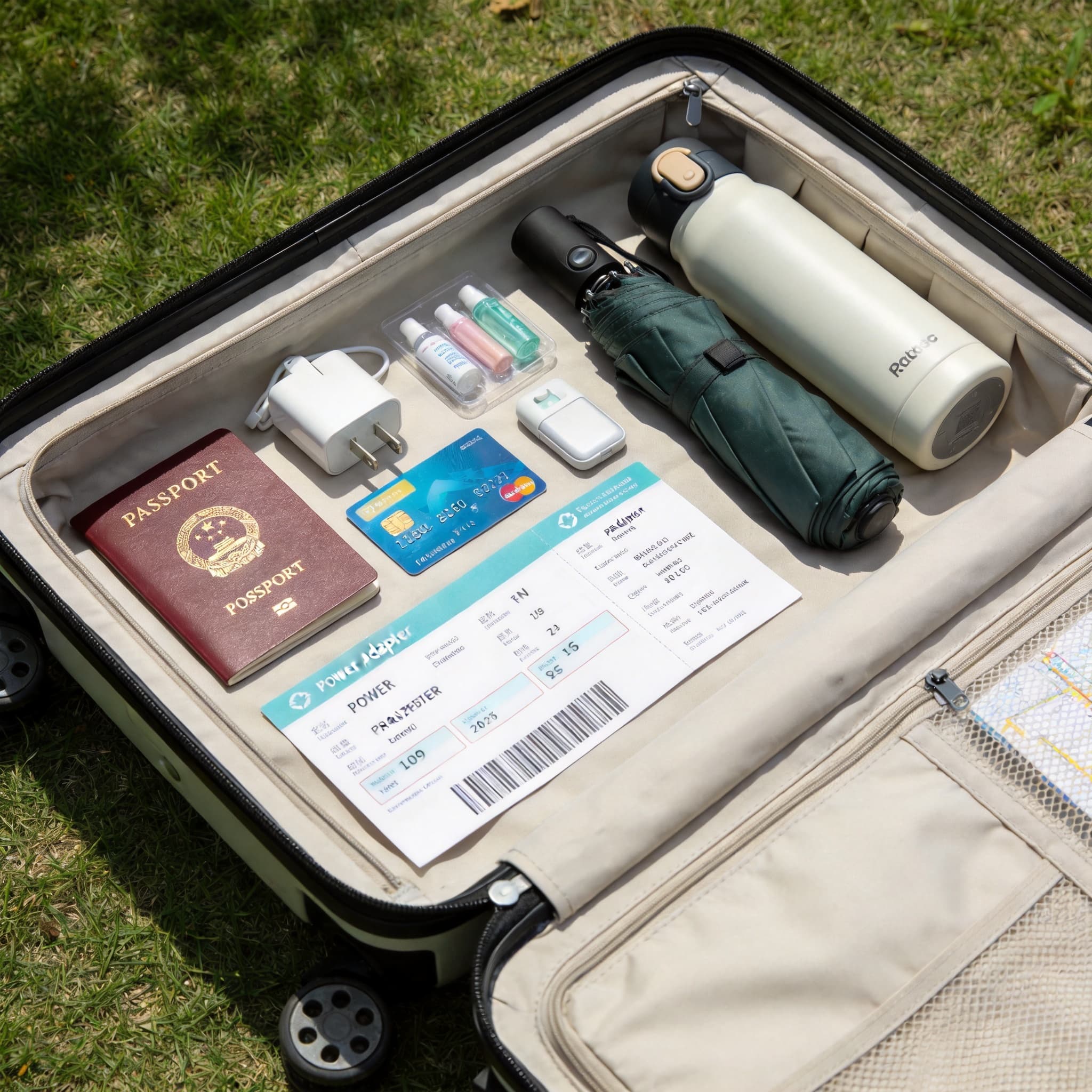
Which Documents Should You Carry?
For either transit option, prepare clear evidence of your travel plans.
Recommended documents include:
- A valid passport;
- A confirmed ticket to a third country or region;
- A confirmed departure date and seat;
- Any visa or entry authorization required by the onward destination;
- Hotel reservations in China;
- A detailed itinerary;
- Contact information for your accommodation or host;
- Travel insurance information;
- Copies of your flight, train, or ship bookings; and
- Supporting documents for business, family, or exchange visits when relevant.
For the 240-hour policy, the passport should generally have at least three months of remaining validity. Airlines or destination countries may impose longer validity requirements, so check all applicable rules before traveling.
What Does “Confirmed Onward Ticket” Mean?
A confirmed onward ticket should clearly show:
- Your full name;
- The departure port in China;
- The third country or region;
- The flight, train, or vessel number;
- The confirmed departure date;
- The scheduled departure time; and
- A confirmed booking or seat.
A flexible reservation without a confirmed departure arrangement may not be accepted.
Separate tickets may sometimes be usable, but they can create practical complications. The airline carrying you to China must be satisfied that you meet Chinese entry or transit requirements before allowing you to board.
What If You Have to Change Airports?
Changing airports may require you to pass through immigration and enter mainland China.
Under the 24-hour policy, this usually means you need permission for temporary entry. Approval is not automatic, and the transfer must be realistically possible within the permitted time.
Under the 240-hour policy, an airport change may be possible if:
- You qualify for the policy;
- Both airports and destinations are within the approved area;
- Your onward journey meets the third-country requirement; and
- Immigration authorities approve your temporary entry.
Always allow enough time for immigration, baggage collection, transportation, check-in, and security screening.
Which Rule Applies to You?
Choose the 24-Hour Policy If:
- Your total transit time is under 24 hours;
- You are making a short international connection;
- You plan to remain inside the airport;
- Your nationality is not included in the 240-hour list; or
- You do not need an extended visit in China.
Choose the 240-Hour Policy If:
- You hold a passport from one of the 55 eligible countries;
- You have a confirmed onward journey to a third country or region;
- You want to leave the airport and explore China;
- Your stay will not exceed the authorized 240-hour period;
- You will enter through an eligible port; and
- Your entire itinerary remains within the permitted area.
Use a Separate Visa-Free Policy If:
Your nationality is covered by China’s unilateral or mutual visa-exemption arrangements, you may be entitled to enter China under that policy instead.
A separate visa exemption may offer:
- A longer stay;
- More flexible travel;
- No third-country transit requirement; and
- Broader access to destinations in mainland China.
If you qualify for both a regular visa-free entry policy and the 240-hour transit policy, border authorities will generally apply the policy appropriate to your nationality and stated purpose of travel.
Common Mistakes to Avoid
1. Booking a Round Trip to the Same Country
A route such as:
Canada → China → Canada
does not normally meet the third-country requirement.
2. Assuming a Domestic Connection Counts as an Onward Destination
A flight from Shanghai to Chengdu is a domestic journey, not proof that you are transiting to a third country. You must also have a confirmed international departure from China.
3. Entering Through a Non-Eligible Port
The 240-hour policy is available only at designated ports. An international airport is not automatically an eligible entry point.
4. Traveling Outside the Permitted Area
Having 240 hours does not mean you can travel anywhere in China. Your movements must remain within the authorized region.
5. Treating 240 Hours as a General Tourist Visa
This is a transit arrangement, not a standard tourist visa. A valid third-country itinerary is essential.
6. Assuming Airport Exit Is Guaranteed Under the 24-Hour Rule
Leaving the transit zone may require a temporary entry permit, which immigration authorities can approve or refuse.
7. Ignoring the Immediate Flight Sequence
Immigration officers generally examine the destinations immediately before and after mainland China. Your country of residence or final return destination does not replace the third-country requirement.
8. Relying Only on an Airline Employee’s Verbal Advice
Airlines conduct boarding checks, but Chinese immigration authorities make the final decision on entry and temporary stay.
Practical Examples
Example 1: Short Airport Connection
Paris → Beijing → Tokyo
Layover: 8 hours
Nationality: French
Plan: Remain inside the airport
Likely option: 24-hour visa-free transit.
Example 2: Five-Day Visit to Shanghai
New York → Shanghai → Seoul
Stay: 5 days
Nationality: American
Plan: Visit Shanghai and approved nearby destinations
Likely option: 240-hour visa-free transit, provided all ports and travel areas qualify.
Example 3: Return Flight to the Same Country
London → Beijing → London
Stay: 4 days
Nationality: British
Likely result: The itinerary does not normally qualify for transit treatment because the traveler returns directly to the same country.
Example 4: Hong Kong as the Next Destination
Sydney → Guangzhou → Hong Kong
Stay in mainland China: 6 days
Nationality: Australian
Likely option: 240-hour visa-free transit, because Hong Kong is treated as a separate region for transit purposes.
Example 5: Nationality Not on the 240-Hour List
Country A → Shanghai → Country B
Layover: 15 hours
Plan: Remain in international transit
Possible option: 24-hour visa-free transit, subject to the traveler’s documents, nationality-specific restrictions, airport procedures, and border inspection.
Final Checklist
Before choosing either policy, confirm all of the following:
- Is my nationality eligible?
- Is my route Country or Region A → China → Country or Region B?
- Is Country or Region B different from Country or Region A?
- Do I have a confirmed onward ticket?
- Will I depart within the permitted period?
- Is my Chinese entry port eligible?
- Is my departure port permitted?
- Will I remain within the authorized travel area?
- Do I meet the entry requirements of my onward destination?
- Do I need to collect baggage or change airports?
- Do I have hotel reservations and supporting documents?
Final Advice
Use the 24-hour policy for a short international connection, especially when remaining inside the airport.
Use the 240-hour policy when you are from an eligible country, have a qualifying third-country itinerary, and want to spend several days exploring approved areas of China.
Because immigration policies, eligible ports, and permitted areas can change, verify the latest rules with China’s National Immigration Administration, the Chinese embassy or consulate responsible for your location, and your airline before departure. Final admission is always decided by Chinese border inspection authorities.
Advertisement
ChinaTravel Editorial Desk
Maintains practical destination and trip-planning information for English-speaking visitors. Time-sensitive details should be checked with official sources.
Compare Current Trip Options
Check live availability and the provider's current terms before booking.
Compare China Trip OptionsSponsored link — we may earn a commission at no extra cost to you.